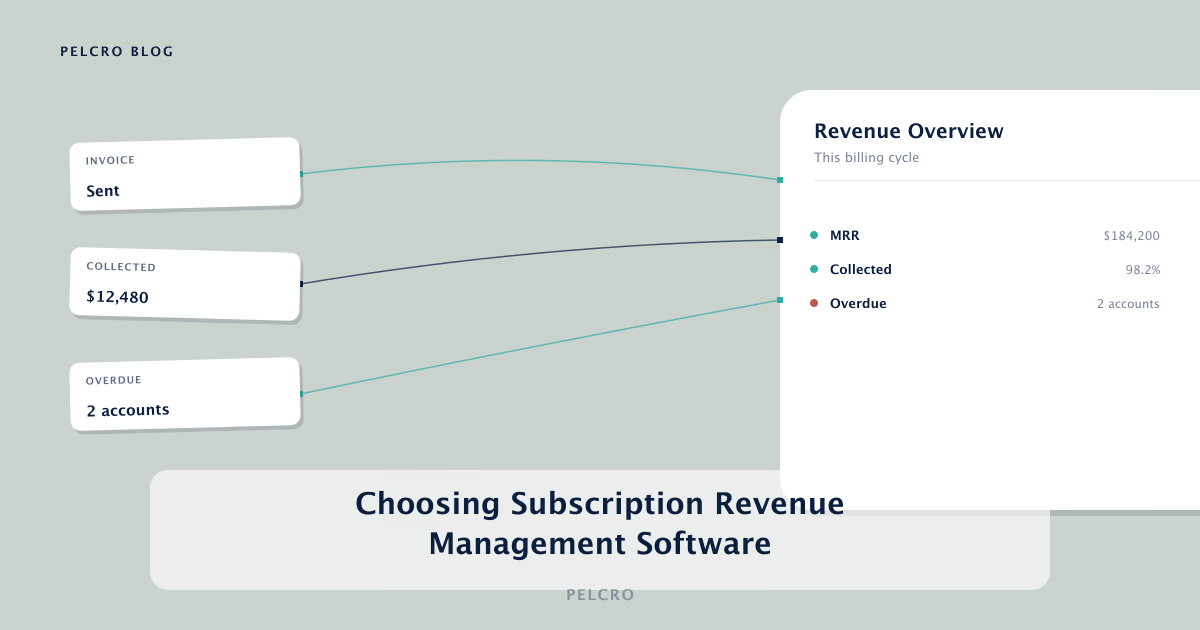
For publishers and subscription businesses running multiple pricing tiers, renewal cycles, and payment methods at once, subscription revenue management software is what keeps every dollar of recurring revenue accounted for.
This guide breaks down what subscription revenue management software does, what to evaluate before choosing one, and how Pelcro brings billing, collections, and reporting into a single platform.
The right subscription revenue management software connects every stage of the revenue lifecycle, from the first invoice to the renewal three years later, so finance and product teams work from the same numbers.
What Is Subscription Revenue Management Software
Subscription revenue management software is a platform that handles billing, invoicing, collections, and revenue reporting for businesses that charge on a recurring basis. A publisher running monthly, annual, and usage-based plans needs subscription revenue management software that can bill each tier correctly and roll every transaction up into one accurate revenue picture.
For a finance or operations team, subscription revenue management software does the work of tracking what was billed, what was collected, what is overdue, and what revenue can actually be recognized this period. Without it, that reconciliation happens manually in spreadsheets pulled from a payment processor, a CRM, and a billing tool that do not talk to each other.
Point solutions handle one slice of this well. A payments tool processes charges; an accounts receivable tool chases overdue invoices; a spreadsheet tries to tie it all together. Pelcro's subscription revenue management software was built to replace that stack, so billing, collections, and reporting share the same subscriber and transaction data instead of three exports that drift out of sync.
How to Choose Subscription Revenue Management Software
Start with billing flexibility. Subscription revenue management software needs to support the pricing models you actually run today, whether that is flat recurring plans, usage-based charges, or a mix of both, and it needs to prorate upgrades and downgrades without manual invoice edits.
Next, check collections and dunning. Failed payments and overdue invoices are where recurring revenue leaks. Strong subscription revenue management software retries failed cards automatically, sends dunning communications on a schedule, and gives your team visibility into who is overdue and why.
Then look at reporting. Subscription revenue management software should tell you your monthly recurring revenue, churn, and days sales outstanding without a manual export-and-pivot exercise every month end. If the platform cannot answer "how much did we actually collect this month" in a few clicks, it is not doing its job.
Finally, weigh integrations. Most finance teams already use an accounting system. Subscription revenue management software that syncs cleanly with your existing accounting stack saves a reconciliation step every billing cycle instead of adding one.
How Pelcro Solves This
Pelcro's subscription revenue management software brings billing, invoicing, accounts receivable, and accounts payable automation onto one platform, so every invoice, payment, and collection touches the same subscriber record instead of living in separate systems that need to be reconciled by hand.
Publishers use Pelcro to automate recurring, usage-based, and one-off invoicing, run digital entitlements and paywalls off the same billing engine, and get AI-assisted insights into revenue trends without building a custom reporting pipeline. Because billing, invoicing, and collections share the same platform, the numbers stay consistent across every system a finance team touches, without a manual export between tools.
Because billing, collections, and entitlements share the same data layer, a plan change or a failed payment updates a subscriber's access and their invoice history at the same time. That is the core promise of subscription revenue management software done right: one system of record instead of several that drift apart.
Frequently Asked Questions
What does subscription revenue management software actually do?
It manages the full revenue lifecycle for a recurring business: generating invoices, processing payments, chasing overdue balances, and reporting on what was actually collected. Good subscription revenue management software ties all of that back to a single subscriber record.
How is subscription revenue management software different from a payment processor?
A payment processor moves money. Subscription revenue management software sits above it, deciding what to bill, when to retry a failed charge, how to handle a mid-cycle upgrade, and how to report the resulting revenue accurately across every plan and pricing model.
Can subscription revenue management software handle usage-based pricing?
Yes. Modern subscription revenue management software supports flat recurring plans, usage-based charges, and hybrid pricing in the same billing engine, so a business can change its pricing model without switching platforms.
Does subscription revenue management software integrate with accounting tools?
It varies by platform. The strongest subscription revenue management software syncs billing and revenue data directly with your accounting stack, so the general ledger reflects what was actually billed and collected without a manual export every month. Confirm which accounting tools a platform connects to before assuming a specific system is supported.