The New York Times
Registration wall
Free account to continue
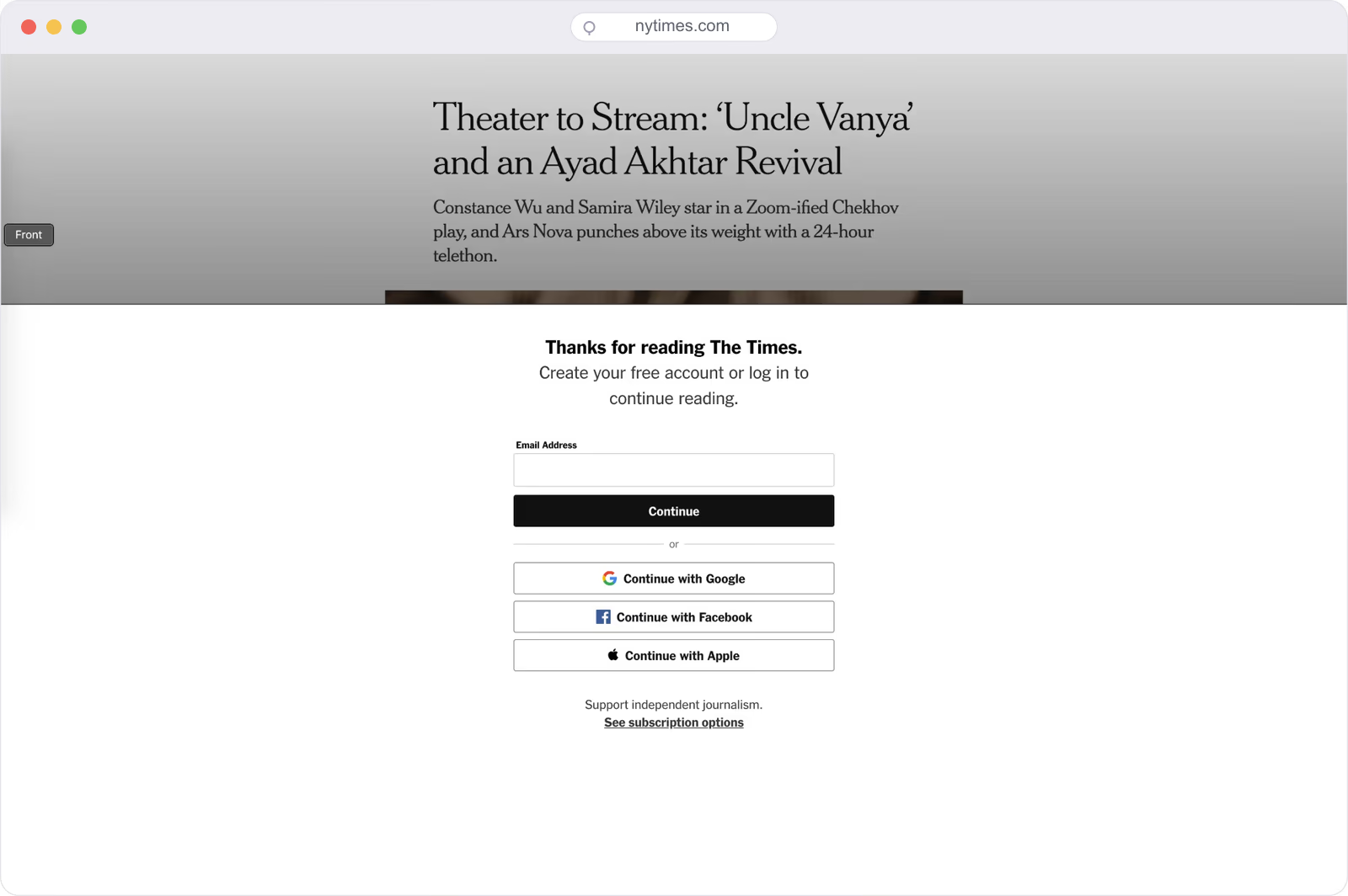
Before the paid wall, a softer registration gate: create a free account (or use Google/Apple/Facebook) to keep reading, trading an email for the article.
Paywall examples · Registration
Real examples of registration walls, free to pass but the reader creates an account or hands over an email to keep reading. See how publishers frame the ask and use it as a first step toward a subscription.
1 example

Registration wall
Free account to continue
Before the paid wall, a softer registration gate: create a free account (or use Google/Apple/Facebook) to keep reading, trading an email for the article.
Examples are captured from live publisher sites and dated. Pricing and offers change often — follow each card's link to confirm the current paywall. Screenshots are shown for reference and commentary; all trademarks belong to their owners.
A registration wall asks a reader to create a free account or enter an email before continuing. No payment changes hands: the publisher trades access for a known identity and a contact address. It often sits in front of a metered or hard paywall as a softer first step.
A registration wall turns anonymous traffic into known readers a publisher can email, measure and convert later. The examples above show the pattern: a clear reason to register, social sign-in options to reduce friction, and a path that leads toward a paid subscription once the reader is engaged. Pelcro runs registration walls alongside metering and subscription offers, so the email you collect feeds straight into the funnel.
See how Pelcro's paywall software worksA registration wall requires a reader to create a free account or submit an email before accessing content. It is free in money terms: the exchange is for an identity and contact details. Publishers use it to turn anonymous visitors into known readers they can email and convert over time.
Publishers often put a registration wall in front of an article, offering a free account or a social sign-in to continue reading. The gallery above collects real registration-wall screens so you can see how each publisher frames the ask and what comes after it.
A registration wall asks for an email or account but no payment; a paywall asks for money. Registration is a lower-friction first step that builds a contact list, and it frequently leads into a metered or hard paywall once the reader is known and engaged.
A known email is worth more than an anonymous visit. Registration lets a publisher send newsletters, measure real reader behaviour, personalise content and target subscription offers to the readers most likely to pay. It raises conversion later without charging anyone up front.
Yes. Pelcro captures the registration, stores the reader as a known customer, and connects the wall to metering and subscription offers, so the emails you collect move straight into your conversion funnel.
20 paywall examples and growing. Looking for more free tools?
Explore all Pelcro free resourcesGet a personalized demo tailored to your audience, products and print operations.
We use cookies and analytics to understand how visitors use our site and to improve your experience. Cookie Policy