The New York Times
Subscription offer
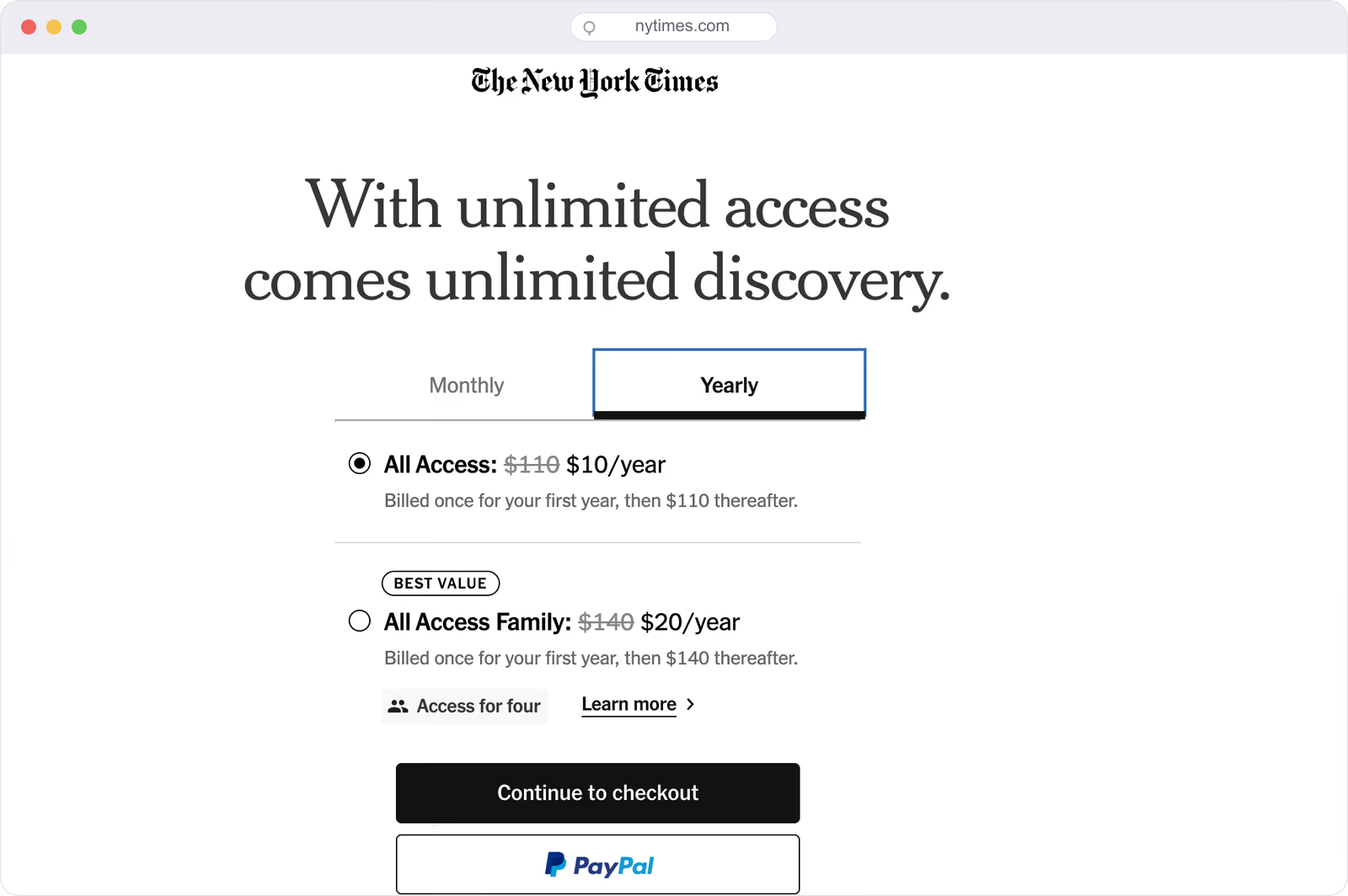
$0.25/wk intro, then $16/mo
A metered model's conversion page: a steep intro-price anchor ($4 struck through to $0.25/week), a monthly/yearly toggle, and a family upsell flagged “best value.”
Paywall examples · Metered
Real examples of metered paywalls, the model that lets readers see a set number of free articles each month, then asks them to subscribe. See how publishers set the meter and frame the offer when the wall appears.
9 examples

Subscription offer
$0.25/wk intro, then $16/mo
A metered model's conversion page: a steep intro-price anchor ($4 struck through to $0.25/week), a monthly/yearly toggle, and a family upsell flagged “best value.”

Subscription offer
From $0.25/wk intro
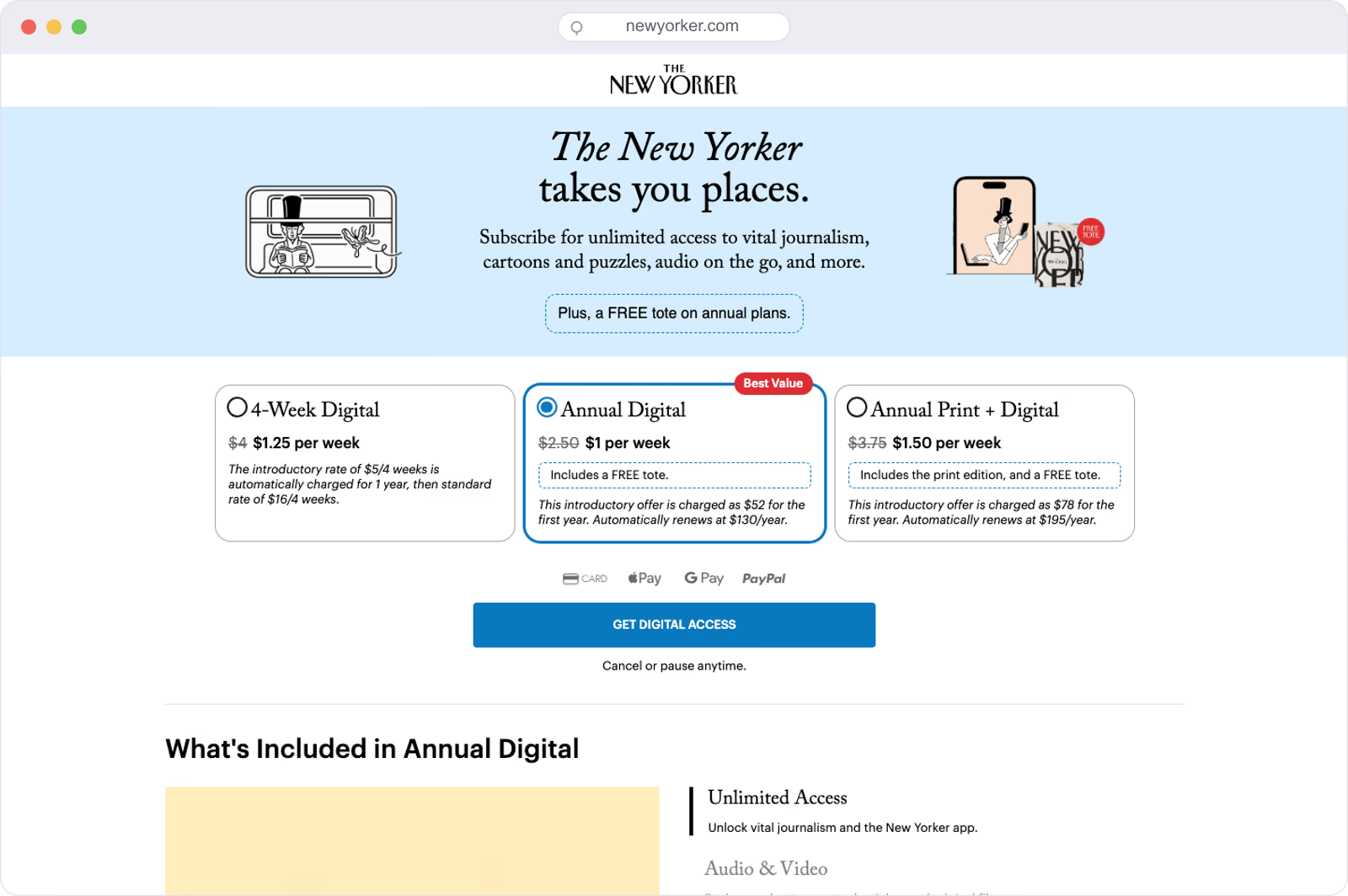
Three options at once — digital, annual digital (pre-selected as “best deal”), and print+digital — with a free tote incentive and a strong intro-price anchor.

Subscription offer
$2.50/mo, first month free
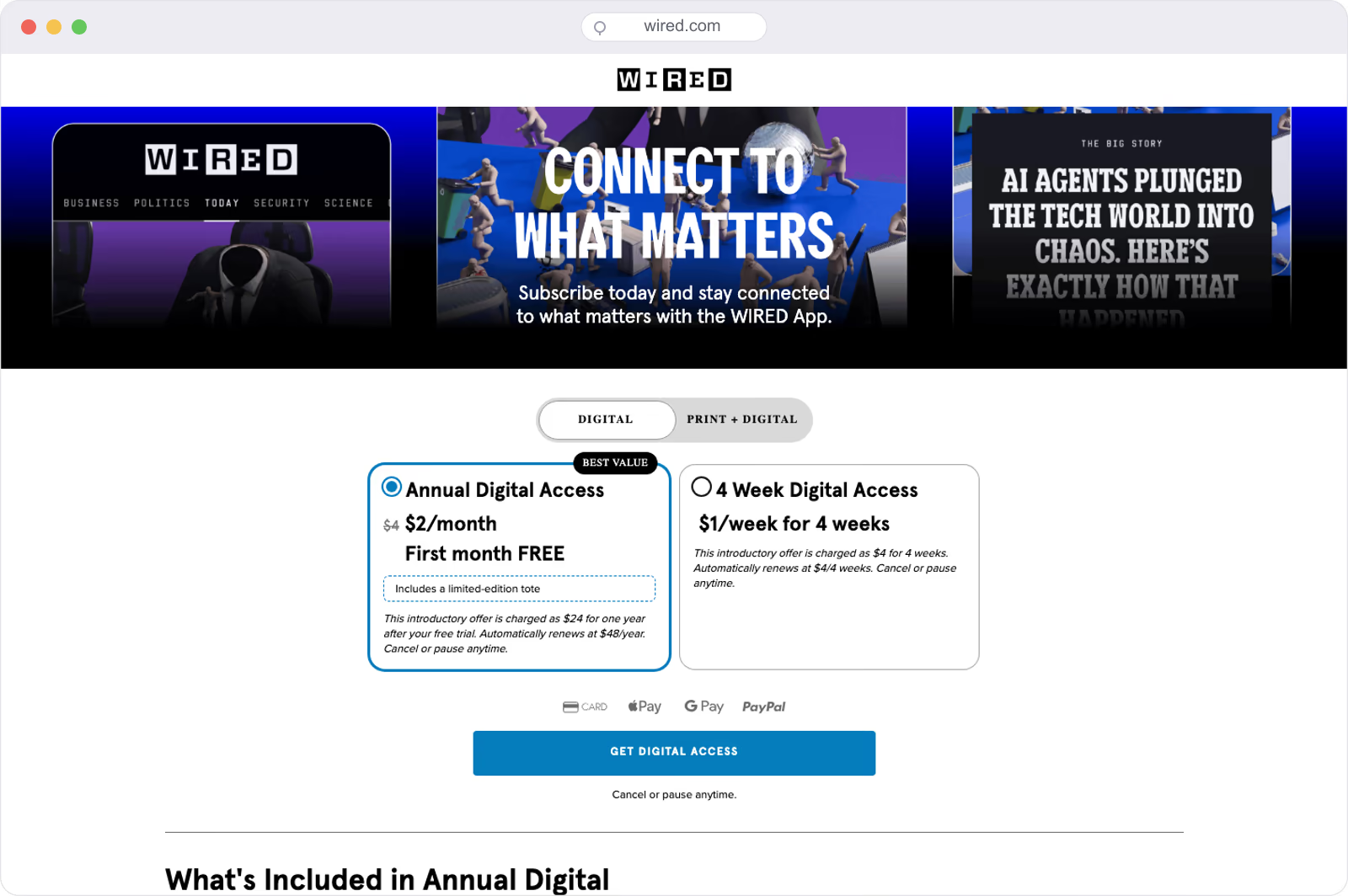
A bold editorial header (“Connect to what matters”) over the offer, with a first-month-free hook and a benefits list that leans on the WIRED app and newsletters.

Subscription offer
Digital $39/yr · Unlimited $99.50/yr
Two clearly separated tiers — digital vs unlimited (with a 50%-off flag) — above a full feature-by-feature compare table, the classic “good/better” ladder.

Subscription tiers
From $12.50/mo
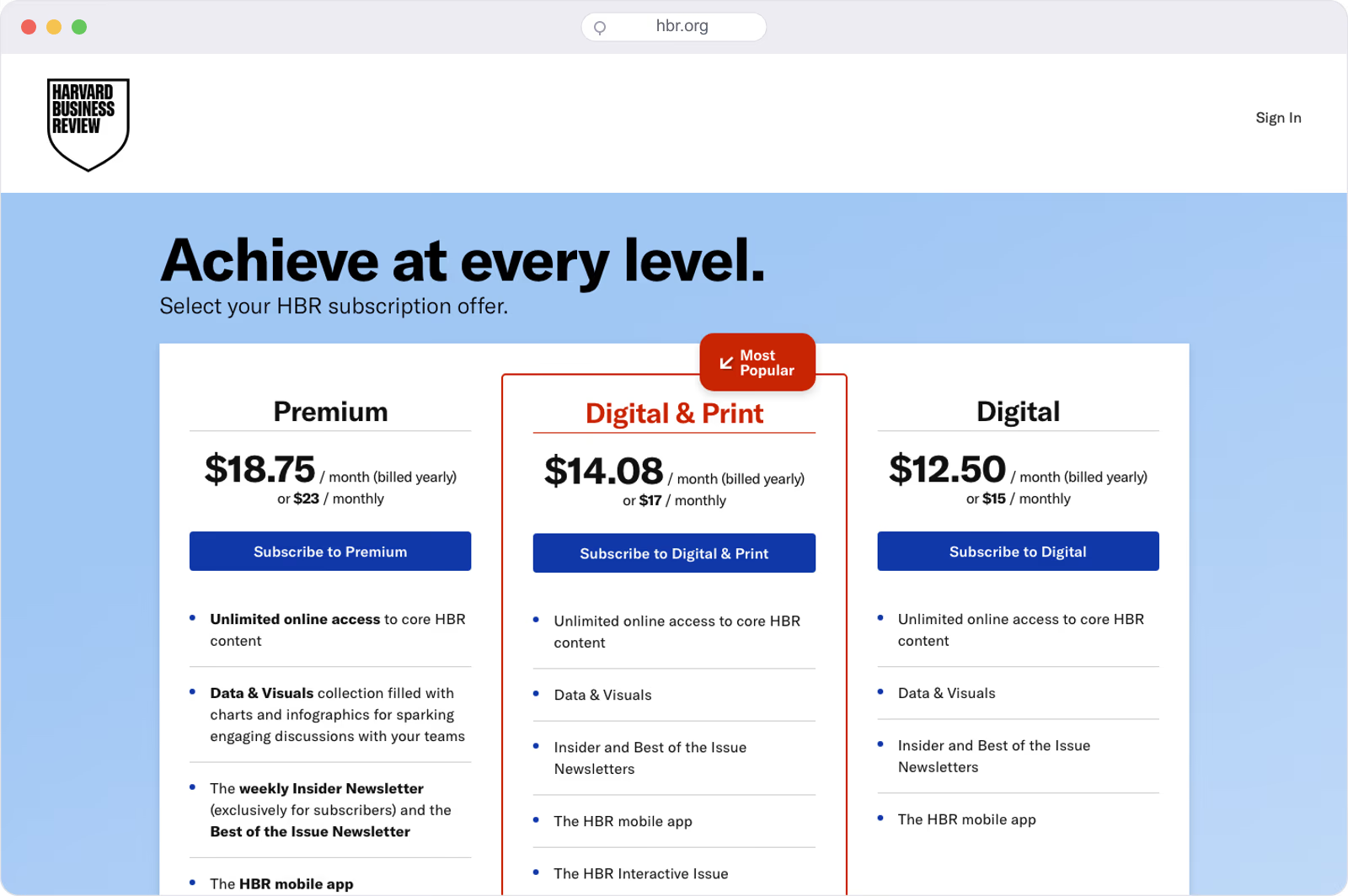
Three tiers with the middle “Digital & Print” option highlighted as “most popular” — textbook decoy pricing — each with its own feature checklist and a group/corporate route.

Subscription offer
$1 for 4 weeks intro
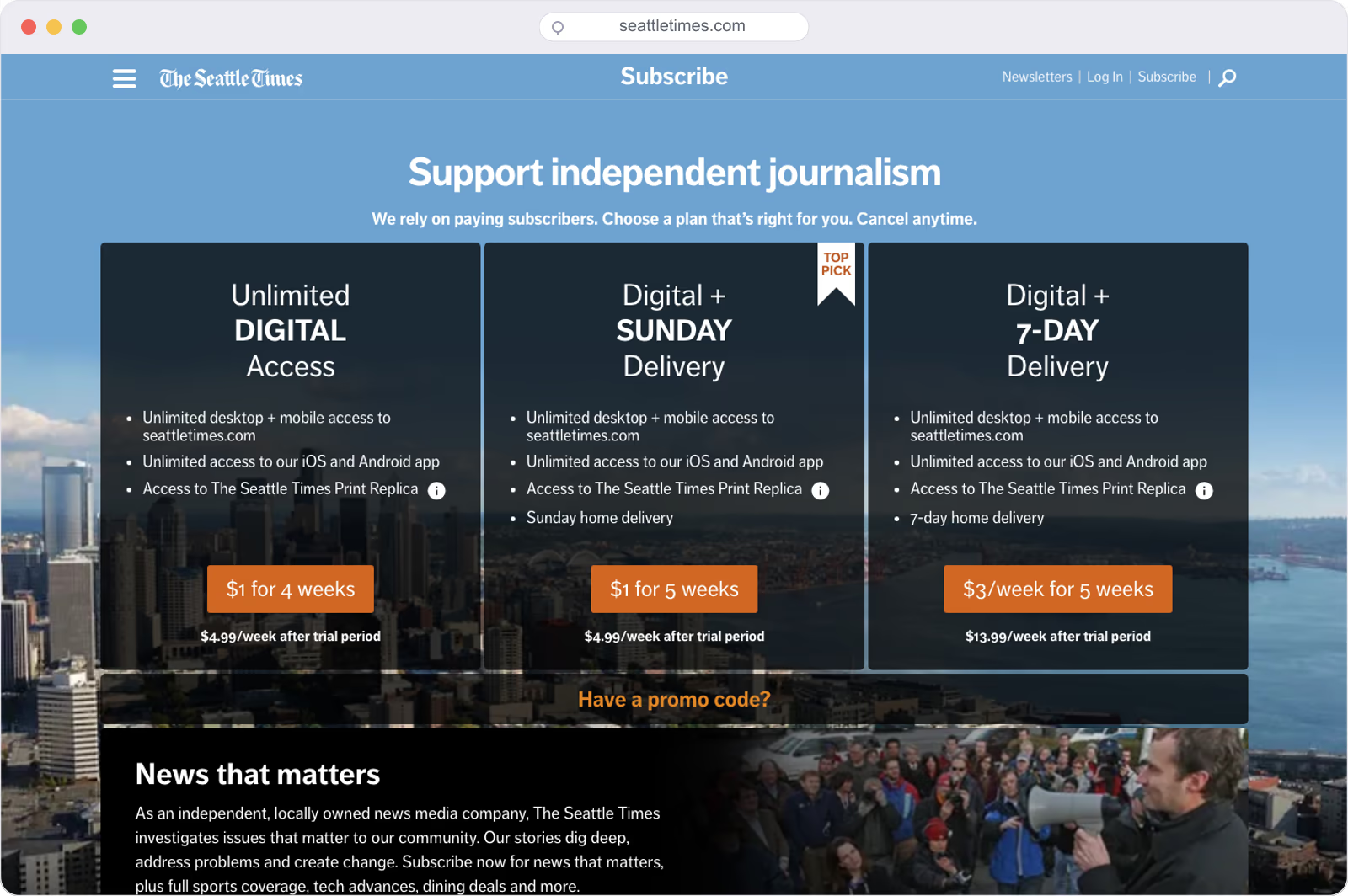
A local paper's three-tier offer (digital, +Sunday print, +7-day print) with a steep $1-for-4-weeks intro and a “support independent local journalism” frame.

Subscription offer
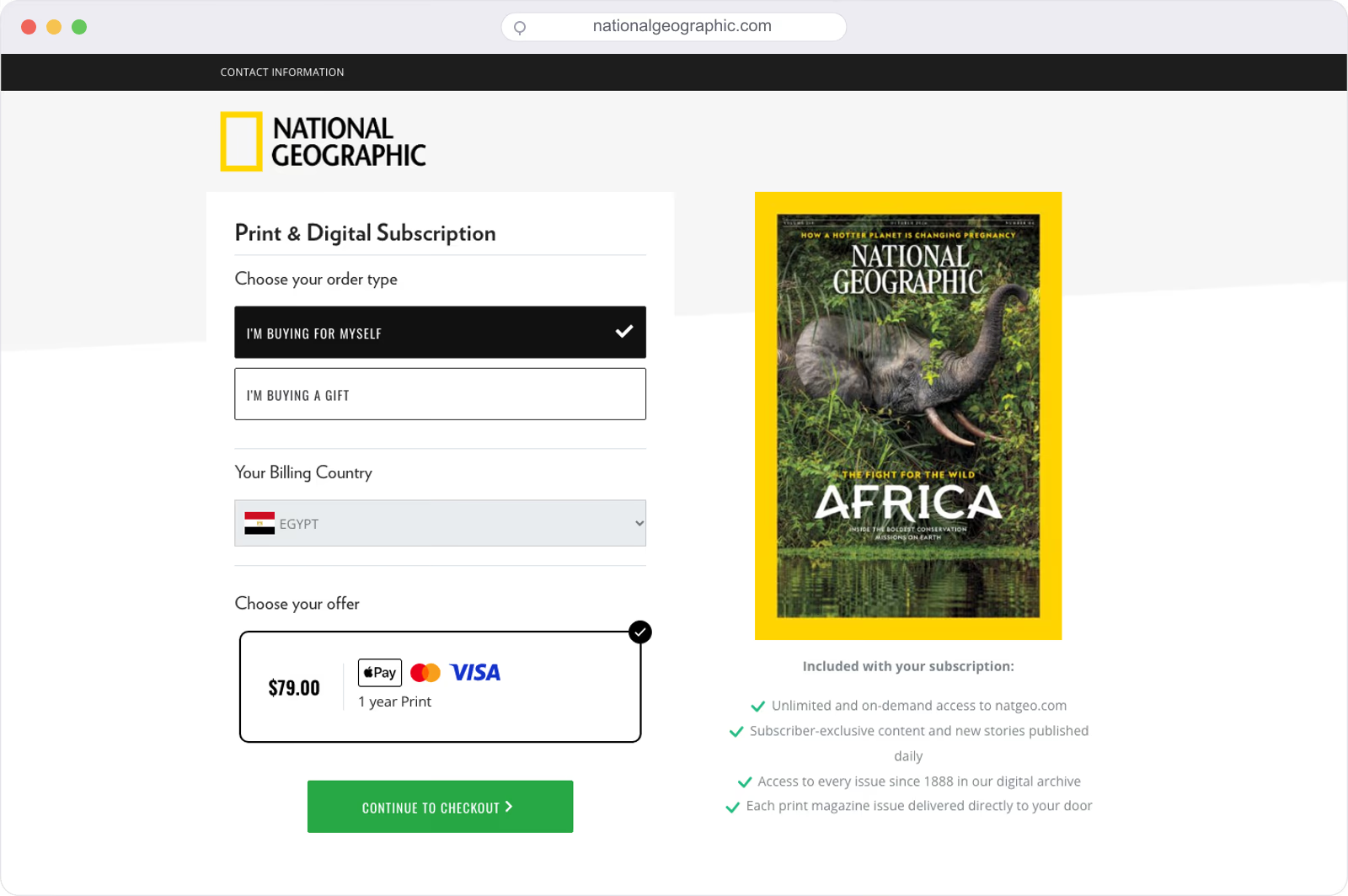
From $19/yr
A single-column print+digital flow with the iconic cover alongside the form, a billing-country selector, and the benefits checked off beside the price.

Subscription offer
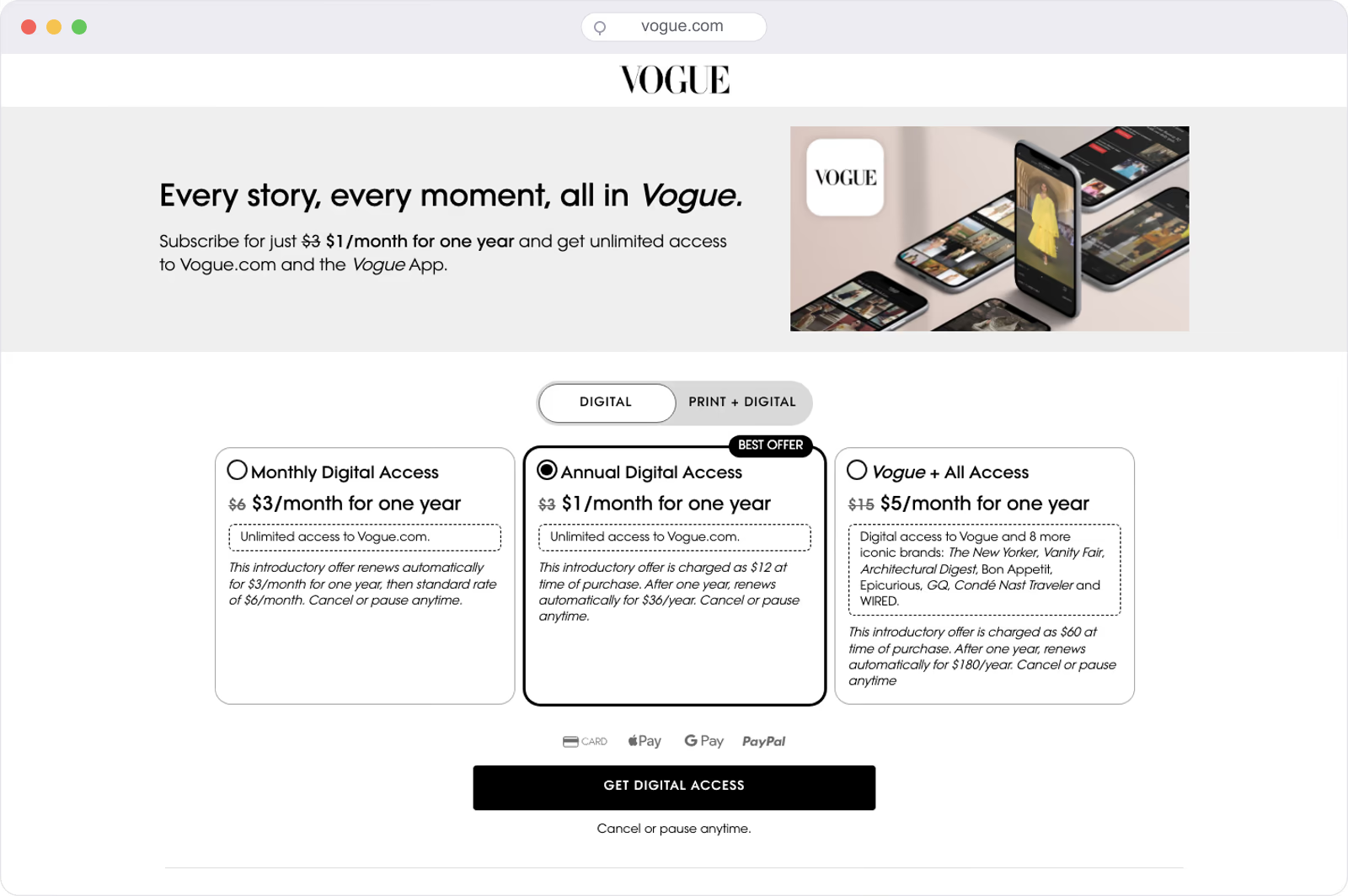
$1/mo for one year
A lifestyle take on the three-option layout (monthly, annual “best deal”, all-access) with an aspirational header and a free-tote incentive.

Subscription offer
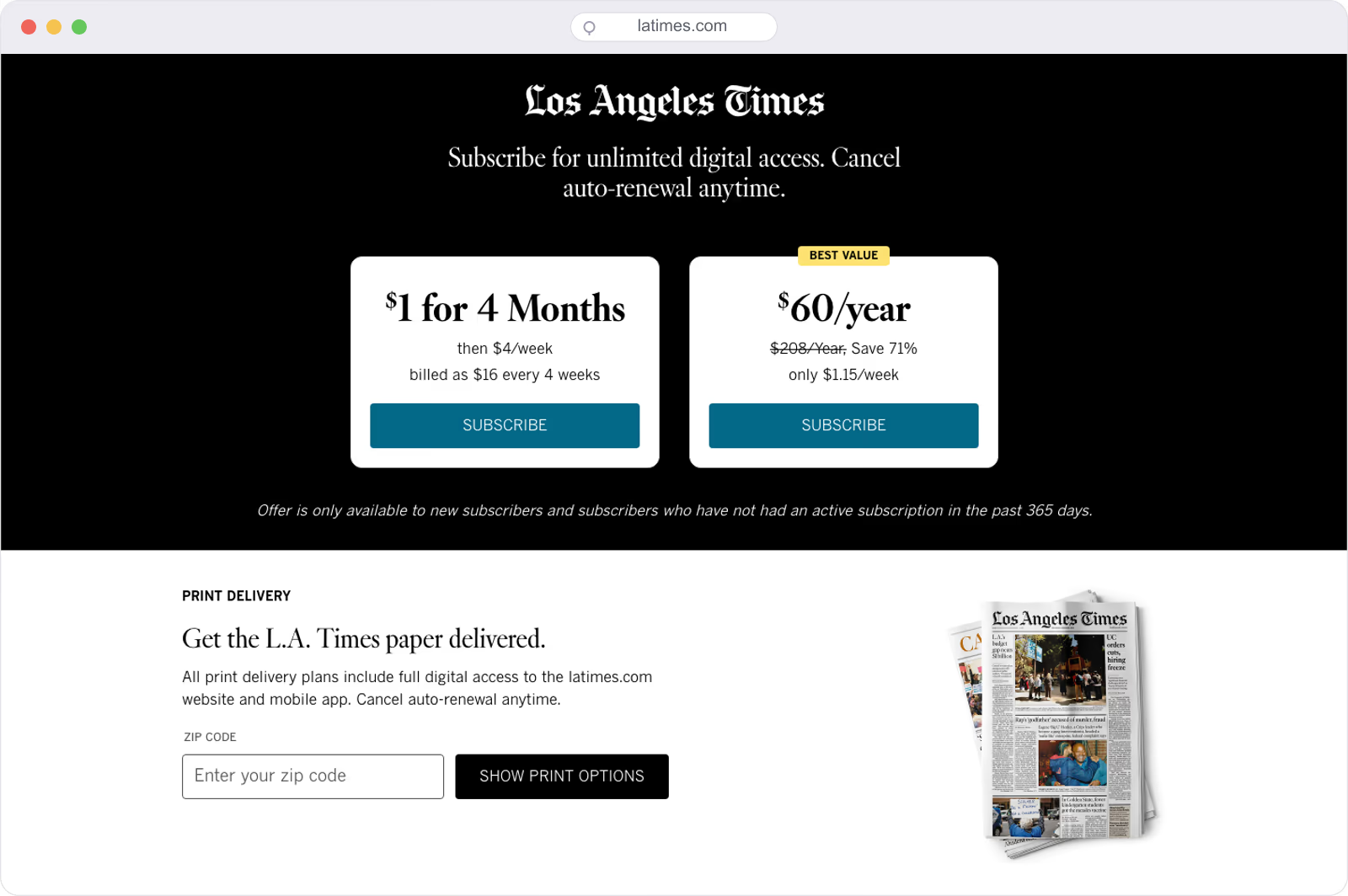
$1 for 4 months, then $60/yr
A two-tier dark-header offer — a deep intro ($1 for 4 months) beside an annual plan badged “best value” at 71% off — with a separate print-delivery path below.
Examples are captured from live publisher sites and dated. Pricing and offers change often — follow each card's link to confirm the current paywall. Screenshots are shown for reference and commentary; all trademarks belong to their owners.
A metered paywall gives every reader a set allowance of free articles in a period, often three to five a month, then shows a subscribe wall once the meter runs out. It is the most common paywall model in general news because it keeps the publisher open to search and social traffic while still converting the most engaged readers.
The meter is a conversion funnel. Casual visitors read a few free articles and leave; regular readers hit the wall, and that is the moment the subscribe offer does its work. The examples above show the pattern: a struck-through intro price, an annual-versus-monthly toggle, a best-value tier, and a short free-trial hook. Pelcro runs metered paywalls for publishers, including the metering rules, the counters, pricing and billing.
See how Pelcro's paywall software worksA metered paywall lets a reader view a fixed number of free articles in a set period, then shows a subscribe wall. The allowance resets each month. It is the standard model for general-news publishers because it keeps most content reachable by search while converting the readers who come back often.
Many national and local newspapers run metered paywalls, letting you read a few articles before the wall appears. The gallery above collects real metered paywall and subscription-offer screens so you can see how publishers count free reads and frame the offer at the wall.
There is no fixed number. Common allowances run from one to ten free articles a month, and many publishers tune it by traffic source or adjust it over time. A tighter meter converts faster but reaches fewer readers; a looser meter reaches more but converts more slowly.
A metered paywall offers free articles before the wall; a hard paywall offers none and blocks from the first visit. Metered paywalls suit publishers with broad, search-driven audiences; hard paywalls suit specialised titles whose content readers will pay for outright.
Yes. Pelcro handles the metering rules, the free-article counter, the wall, pricing, offers and billing, so a publisher can run a metered model without building the logic in-house.
20 paywall examples and growing. Looking for more free tools?
Explore all Pelcro free resourcesGet a personalized demo tailored to your audience, products and print operations.
We use cookies and analytics to understand how visitors use our site and to improve your experience. Cookie Policy