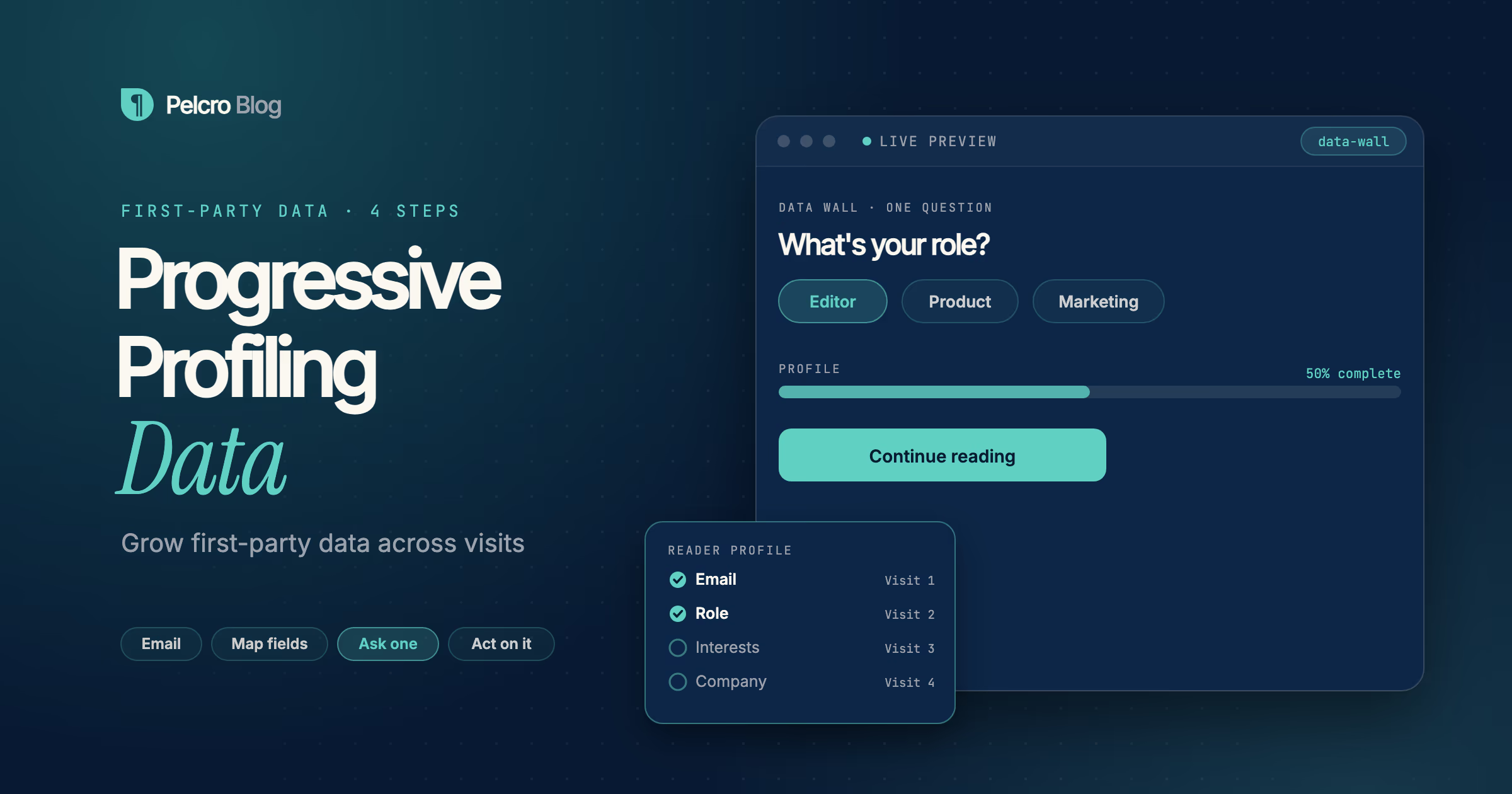
Progressive profiling is collecting a reader's data gradually across several visits instead of asking for everything in one long signup form. For publishers, it means asking for an email first, then a job title or a topic interest on a later visit, so sign-up stays frictionless while your first-party data grows over time.
This guide is for publisher audience and data teams that want to grow first-party data without hurting conversion. It explains what progressive profiling is and gives a four-step way to run it.
What is progressive profiling?
Progressive profiling is a data-collection method that spreads questions across multiple interactions rather than one form. A reader might give only an email to read their first gated article, then on a later visit answer one question about their role or interests before reading again.
The reason it works is friction. Every extra field on a signup form lowers completion, so a long form trades sign-ups for data. Progressive profiling keeps the first ask tiny, which protects conversion, and gathers the richer data later once the reader has a reason to keep coming back.
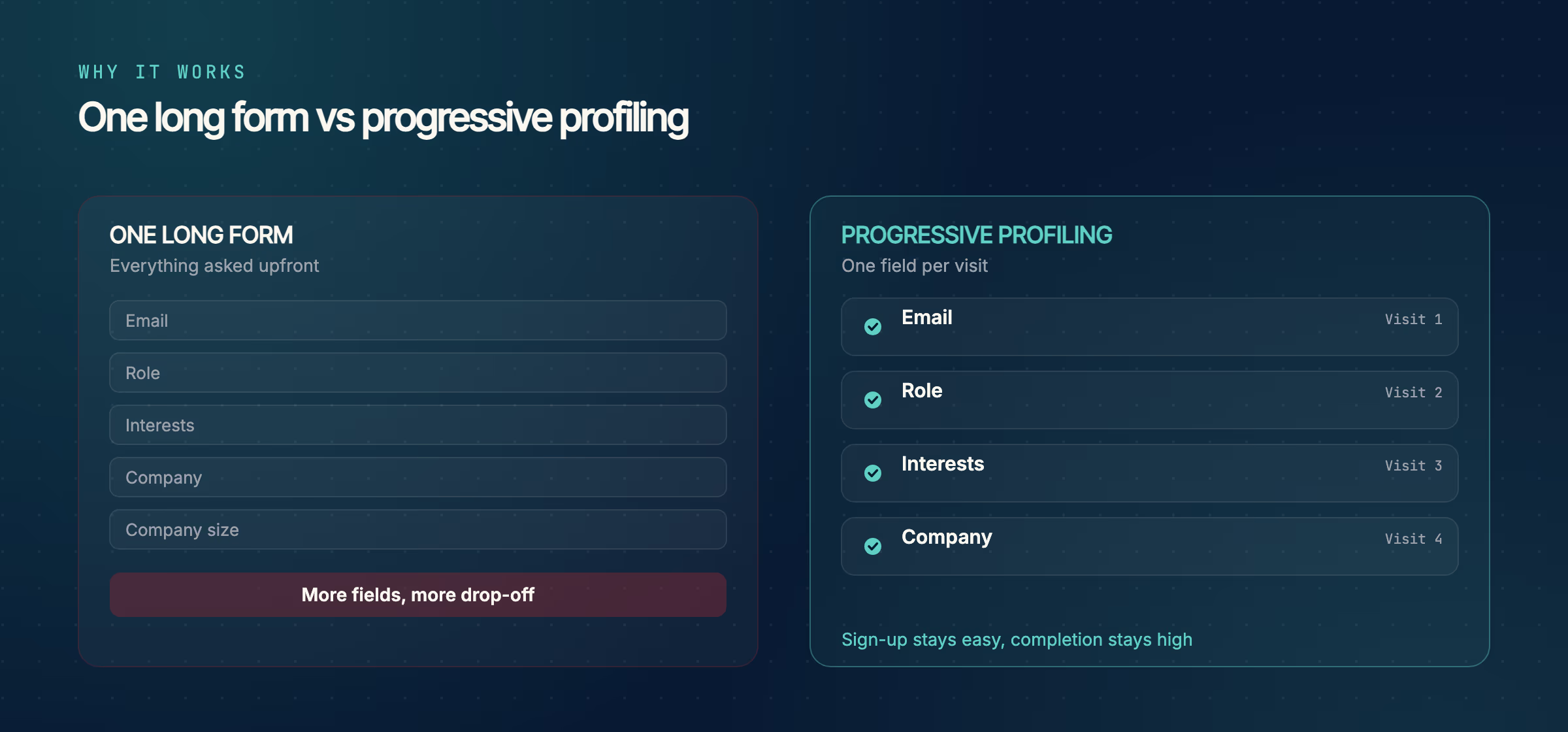
Most publishers collect data with a single registration or data wall and leave it there. Progressive profiling instead treats the registration wall as the first step in a sequence, asking for one new thing at a time. Done well, it builds a fuller reader profile than a one-time form ever could, without the drop-off.
How to use progressive profiling: a 4-step guide
Treat profiling as a sequence you design once and let run.
- EmailAsked on visit 1
- RoleAsked on visit 2
- InterestsAsked on visit 3
- CompanyAsked on visit 4
1. Start with the minimum. Ask only for an email on the first gate. The goal of the first interaction is to turn an anonymous reader into a known contact, nothing more, because every extra field costs you sign-ups. See registration walls for that first step.
2. Map the fields you actually need. List the data that will change a decision, such as job title, company size, or topic interests, and drop the fields that would only be nice to have. A short, purposeful list keeps the sequence from dragging on.
3. Ask for one field per visit. On each return visit, the wall asks a single new question before the reader continues. One field at a time feels like a small favour rather than a form, which is why completion stays high across the sequence.
4. Act on the data. Profiling only pays off when the data changes something: a segment, a newsletter, an offer, or a sales signal for B2B titles. Connect what you learn to the rest of your audience work in 4 ways to learn more about your audience.
How Pelcro supports progressive profiling
Pelcro gives you the building blocks for progressive profiling on the same platform as billing and access. Registration and data walls capture reader information at the gate, custom fields let you set what each wall asks, and everything lands on one subscriber record rather than a separate data tool.
Because identity and access sit on that same record, a reader stays one profile across visits and devices, which is what lets you add to their data over time instead of starting over. Readers can also see and manage their details in the self-serve portal.
For the mechanics of the walls themselves, see paywall and registration wall examples, which covers the data wall pattern progressive profiling builds on.
Frequently Asked Questions
What is progressive profiling in simple terms?
Progressive profiling is asking a reader for a little information at a time across several visits, instead of one long form upfront. It keeps sign-up easy while slowly building a fuller profile.
Why is progressive profiling better than a long signup form?
Long forms lower completion, because every extra field gives a reader a reason to leave. Progressive profiling protects the first conversion with a tiny ask, then gathers the rest once the reader is engaged.
What data should publishers collect with progressive profiling?
Collect only the fields that change a decision, such as topic interests, job title, or company size for B2B titles. Skip data you would not act on, since each question still has a small cost to completion.
How does progressive profiling relate to a registration wall?
A registration wall is the first step, capturing an email. Progressive profiling extends that wall into a sequence, asking for one additional field on later visits so the profile grows over time.