
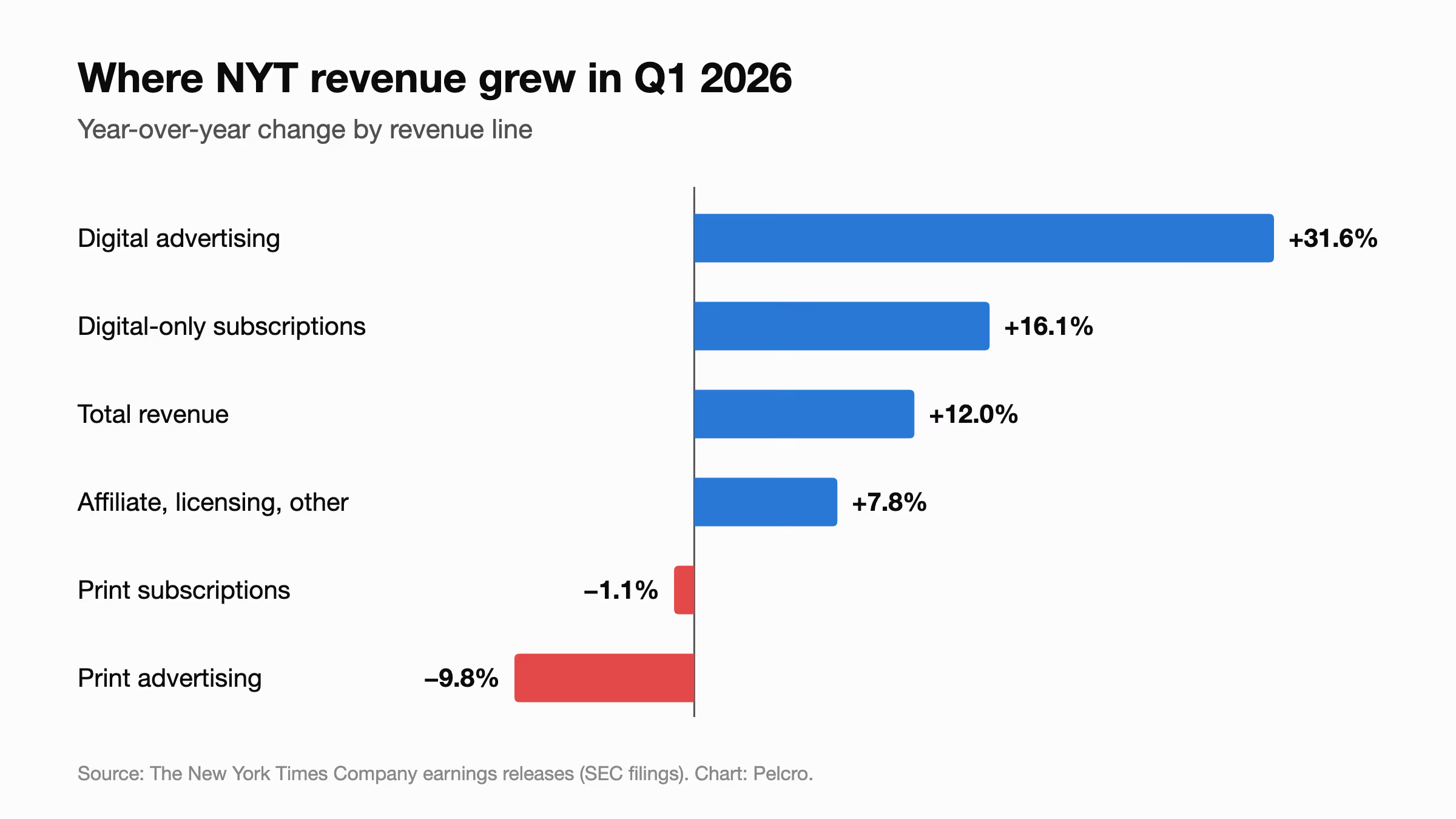
The New York Times added about 310,000 net digital-only subscribers in the first quarter of 2026, reaching 13.08 million total subscribers. Revenue grew 12.0% to $712.2 million, and adjusted operating profit rose 27.2% to $117.9 million.
For publishers building a subscription business, the New York Times Q1 2026 results are a useful benchmark for subscriber growth, pricing, and margins at scale. This review covers the key numbers, five takeaways, and what a smaller publisher can borrow from the playbook.
Scope and Snapshot
The New York Times Company reported its first-quarter 2026 results on May 6, 2026. All figures below come from the company's Q1 2026 earnings release filed with the SEC, and comparisons are to Q1 2025.
Q1 2026 key results:
- Total revenue: $712.2M (+12.0% YoY)
- Digital-only subscription revenue: $389.0M (+16.1%)
- Digital advertising revenue: $93.3M (+31.6%)
- Print advertising revenue: $33.6M (-9.8%)
- Affiliate, licensing and other revenue: $68.5M (+7.8%)
- Operating profit: $90.6M (+54.5%)
- Adjusted operating profit: $117.9M (+27.2%)
- Digital-only net adds: about 310,000
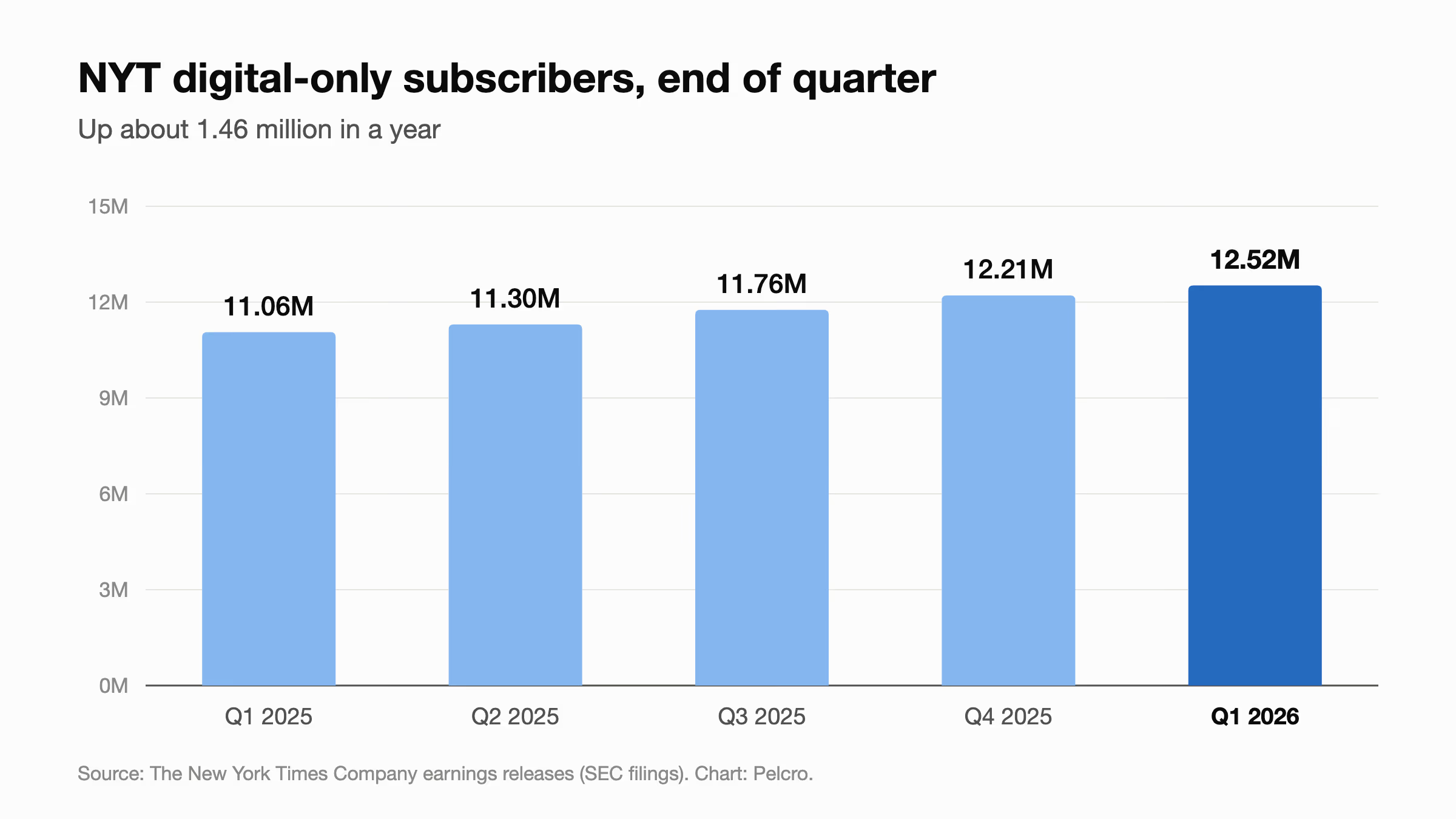
- Total subscribers: 13.08M, including 12.52M digital-only
- Digital-only ARPU: $9.77 (+2.4%)
Keypoint 1: Subscriber Growth Continues at Scale
The Times ended the quarter with 12.52 million digital-only subscribers, up about 1.46 million from a year earlier. Adding 310,000 in a single quarter on a base that large shows how much demand the bundle still pulls in.
Quarterly net adds did slow from the back half of 2025, when the company added about 460,000 in Q3 and 450,000 in Q4. A first quarter after a strong holiday period often looks softer, so the year-over-year view is the better read.
What to expect:
The company told investors it expects digital-only subscription revenue to grow 14% to 17% in Q2 2026, so it is planning on continued growth rather than a plateau.
Why it matters:
Even the largest subscription publisher still grows by more than a million digital subscribers a year. The market for paid digital news and lifestyle content is not saturated, and a well-packaged offer keeps finding new buyers.
Keypoint 2: ARPU Rises as Promotions Roll Off
Digital-only ARPU reached $9.77, up 2.4% year over year. The company says the increase came mainly from subscribers moving from promotional prices to higher prices, plus price increases on certain tenured subscribers.
Digital-only subscription revenue grew 16.1%, faster than either subscriber growth or ARPU alone, because both moved up at once.
What to expect:
As the large cohorts acquired in 2025 on introductory offers reach full price, ARPU should keep climbing, as long as retention holds through each step-up.
Why it matters:
The NYT model is simple: acquire at a discount, then graduate subscribers to full price over time. The hard part is the step-up moment, when a subscriber sees a higher charge for the first time. Clear renewal notices, flexible plans, and an easy way to downgrade instead of cancel are what keep that revenue.
Keypoint 3: Digital Advertising Jumps 31.6%
Digital advertising revenue rose 31.6% to $93.3 million, which the company attributes to strong marketer demand and growth in advertising supply. Print advertising fell 9.8% to $33.6 million, and total advertising grew 17.3% to $126.8 million.
What to expect:
The company guided Q2 digital advertising growth to the high teens, a slower pace than Q1 but still well ahead of print.
Why it matters:
A large, logged-in subscriber base is also a premium advertising audience. Publishers that know who their readers are can sell first-party audiences that open-web inventory cannot match, so subscriptions and advertising strengthen each other.
Keypoint 4: Margins Expand While Costs Rise
Operating costs rose 7.7% to $621.6 million, and adjusted operating costs rose 9.4%, driven mostly by higher compensation for the newsroom. Sales and marketing costs grew 17.1% to $77.3 million.
Revenue grew faster than costs, so the adjusted operating profit margin rose about 200 basis points to 16.6%. Free cash flow was $81.5 million for the quarter, and the company ended March with $1.1 billion in cash and marketable securities and no debt.
Why it matters:
Recurring subscription revenue is what lets the Times spend more on journalism and marketing while still expanding margins. Predictable revenue makes reinvestment a planning decision instead of a gamble.
Keypoint 5: Licensing Grows and AI Litigation Continues
Affiliate, licensing and other revenue rose 7.8% to $68.5 million, mainly from higher licensing revenue. The company also recorded $4.2 million in costs tied to its lawsuits over the use of its journalism to develop generative AI products, which it reports as a special item.
What to do:
Audit where your archive and content are licensed, syndicated, or scraped. Content that trains or feeds AI products has value, and publishers that track it are better placed to license it.
Why it matters:
Licensing is becoming a real revenue line for publishers with distinctive content. The Times is pursuing it two ways, through licensing deals and through the courts.
How Pelcro Helps Publishers Apply the NYT Playbook
Pelcro is a subscription and billing platform built for publishers. The mechanics behind the New York Times results, such as introductory offers that step up to full price, bundles, and retention at renewal, are the same mechanics Pelcro runs for media companies of every size.
You can create targeted promotions with introductory pricing, then let subscribers renew at full price automatically. Entitlement management controls which products each plan unlocks, so a bundle of news, newsletters, podcasts, or games is a plan setting rather than a custom build.
To protect revenue at the step-up moment, Pelcro's client portal lets subscribers change plans on their own, and AI Billing lets you set plans and renewal pricing in plain English. If games are part of your engagement strategy, Pelcro's free Word Scramble game comes with an embed code you can add to your site today.
Want to compare the Times with its closest rival? Read our Wall Street Journal Q3 fiscal 2026 review, which covers the same January to March period, or browse all industry reports.
Frequently Asked Questions
How many subscribers did The New York Times have in Q1 2026?
The New York Times ended Q1 2026 with about 13.08 million total subscribers, including about 12.52 million digital-only subscribers. It added about 310,000 net digital-only subscribers during the quarter.
What was The New York Times revenue in Q1 2026?
Total revenue was $712.2 million, up 12.0% from $635.9 million in Q1 2025. Digital-only subscription revenue was $389.0 million, up 16.1%.
What is digital-only ARPU at The New York Times?
ARPU is average revenue per user, calculated by the company over a 28-day billing cycle. Digital-only ARPU was $9.77 in Q1 2026, up 2.4% year over year, mainly because subscribers moved from promotional to higher prices.
When does The New York Times report its next quarterly results?
The New York Times reported Q2 2026 results on August 5, 2026. Read our New York Times Q2 2026 review for those numbers.