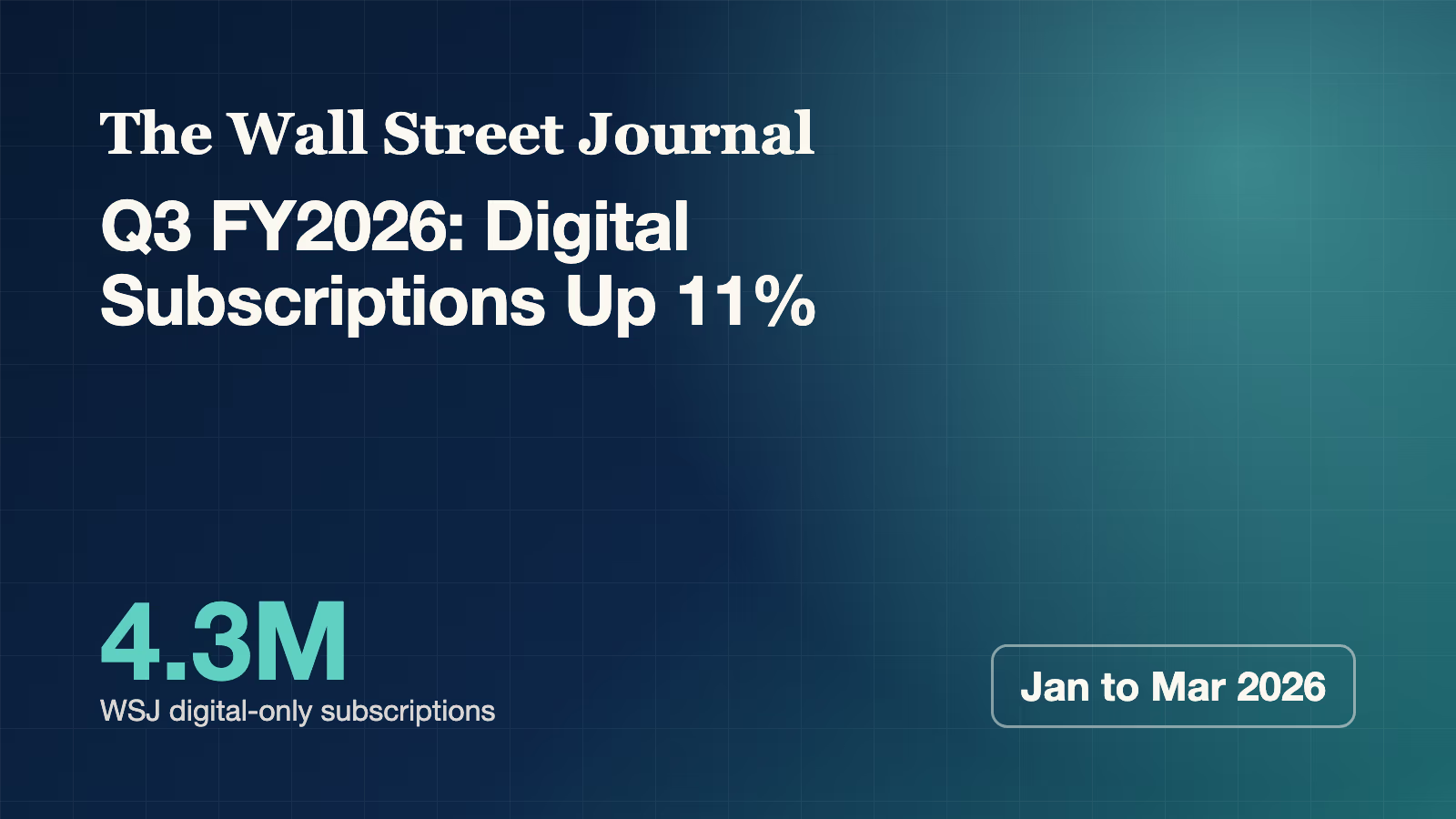
The Wall Street Journal averaged 4.3 million digital-only subscriptions in the January to March 2026 quarter, up 11% year over year, driven by enterprise subscriptions. Dow Jones, the News Corp segment that publishes the Journal, grew revenue 8% to $619 million and segment EBITDA 11% to $147 million.
For publishers comparing subscription models, the Wall Street Journal results show how a business-focused title grows through enterprise sales and pricing discipline. This review covers the key numbers, five takeaways, and how they compare with The New York Times over the same period.
Scope and Snapshot
The Wall Street Journal does not report on its own. It is part of Dow Jones, a segment of News Corp, whose fiscal year ends June 30. The quarter ended March 31, 2026 is News Corp's fiscal Q3 2026, which matches calendar Q1 2026.
All figures below come from News Corp's fiscal Q3 2026 earnings release filed with the SEC on May 7, 2026. Comparisons are to the same quarter a year earlier, and subscription figures are averages for the quarter.
Fiscal Q3 2026 key results:
- Dow Jones revenue: $619M (+8% YoY)
- Dow Jones segment EBITDA: $147M (+11%)
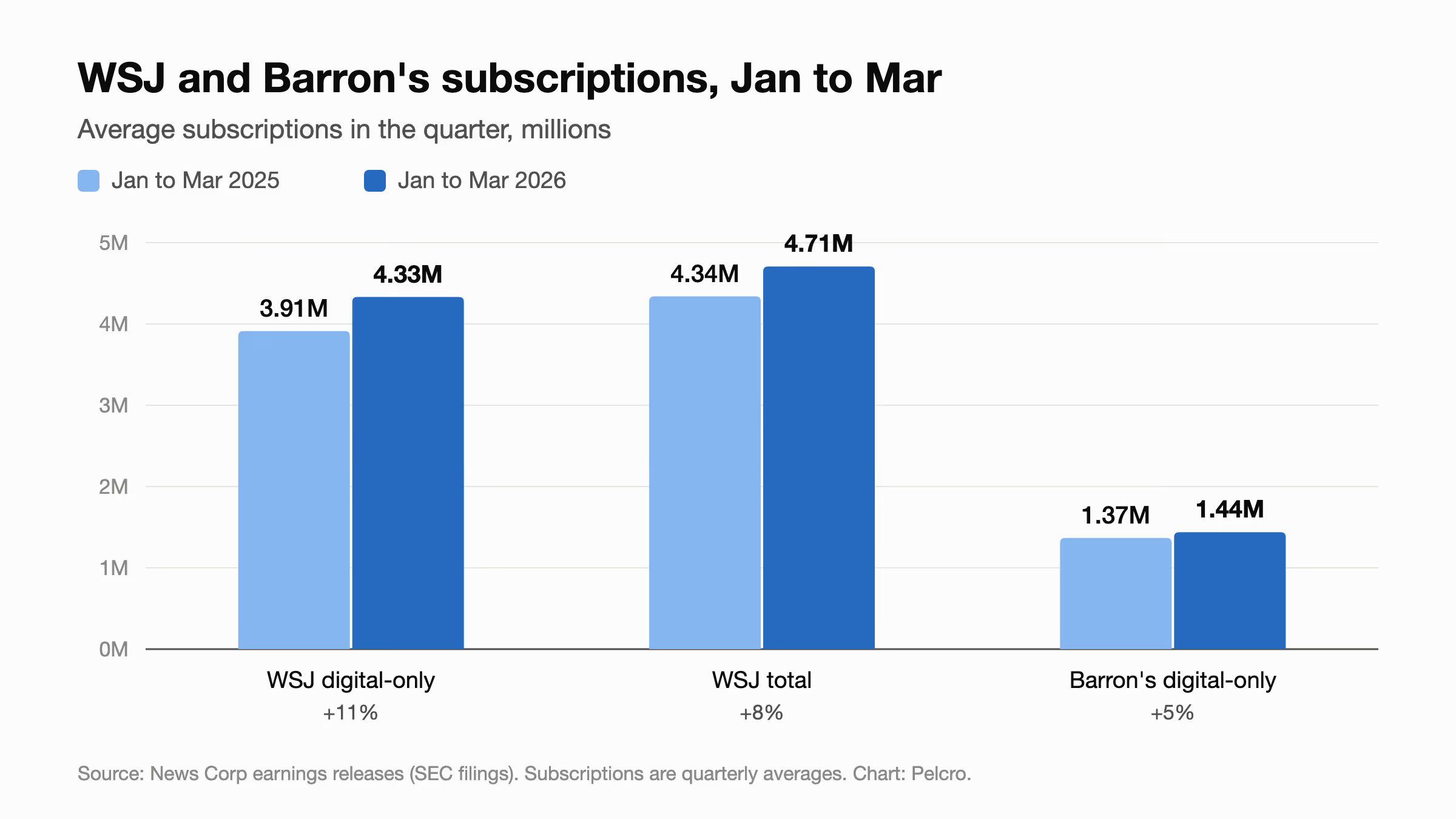
- WSJ digital-only subscriptions: 4.33M (+11%)
- WSJ total subscriptions: 4.71M (+8%)
- Digital share of WSJ subscriptions: 92%
- Dow Jones consumer digital-only subscriptions: 6.06M (+9%)
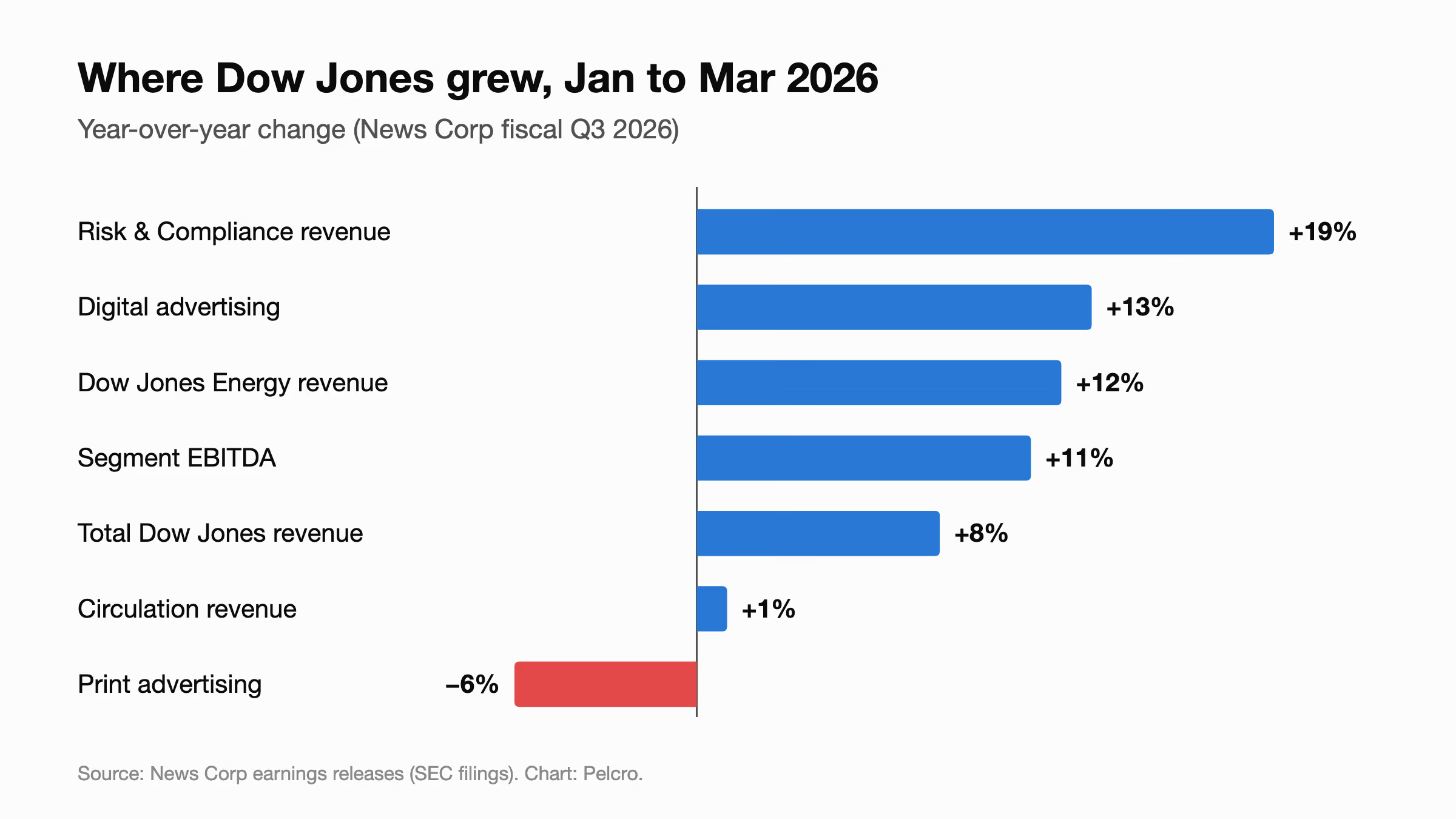
- Digital advertising revenue: +13%
- Digital share of Dow Jones revenue: 84% (from 82%)
- News Corp total revenue: $2.19B (+9%)
Keypoint 1: Enterprise Subscriptions Power WSJ Growth
WSJ digital-only subscriptions grew 11% to an average of 4.33 million, and News Corp credits growth in enterprise subscriptions. Total WSJ subscriptions, including print, grew 8% to 4.71 million, with digital now 92% of the total.
Across all Dow Jones consumer products, including Barron's, digital-only subscriptions grew 9% to nearly 6.1 million, and total subscriptions passed 6.5 million.
What to expect:
Enterprise and group subscriptions are likely to stay a growth engine for the Journal, since companies and universities buy many seats in a single contract.
Why it matters:
Selling to organizations is a different motion from selling to individuals. One contract can add hundreds of subscribers, and group accounts tend to renew as a unit. Publishers with a professional or academic audience should treat group sales as a channel, not an afterthought.
Keypoint 2: Pricing Lifts Circulation Revenue
Circulation revenue rose 1%, driven by customers converting from introductory promotions to higher pricing and by growth in digital-only subscriptions, partly offset by lower print volume. Digital circulation revenue was 76% of circulation revenue, up from 75%.
What to expect:
As with The New York Times, the Journal's revenue growth increasingly depends on graduating discounted subscribers to full price.
Why it matters:
Two of the biggest subscription publishers in the US describe the same lever in their results: acquire on an introductory offer, then convert to full price. The renewal moment is where that revenue is won or lost.
Keypoint 3: Professional Information Outgrows Consumer News
Within Dow Jones, circulation and subscription revenue grew 7%, led by an 11% increase in the professional information business. Risk & Compliance revenue grew 19% to $100 million, and Dow Jones Energy revenue grew 12% to $77 million.
On March 16, 2026, News Corp held a Dow Jones investor briefing and laid out a pathway to $1 billion in annual Dow Jones segment EBITDA within five years, which it expects to benefit from growth in Risk & Compliance and Energy.
Why it matters:
Data and specialist information products can command far higher prices than general news. Publishers with deep expertise in a niche should consider whether a premium professional tier, sold to businesses, fits alongside the consumer subscription.
Keypoint 4: Digital Advertising Grows 13%
Dow Jones advertising revenue rose 6%, with digital advertising up 13% and print advertising down 6%. Digital advertising made up 67% of Dow Jones advertising revenue, up from 63% a year earlier.
Segment EBITDA rose 11% to $147 million on the higher revenue, partly offset by higher employee costs.
Why it matters:
A high-income, business audience is valuable to advertisers. The Journal's results show that a subscription strategy and a premium ad business can grow together.
Keypoint 5: AI Licensing Becomes Part of the Story
In the release, CEO Robert Thomson described News Corp as an "AI inputs company," pointing to a recent deal with Meta that complements its existing partnership with OpenAI. He said News Corp is in discussions with other companies and intends to pursue firms that scrape and resell its content.
What to do:
Know where your content goes. Track which AI crawlers access your site, decide which ones to allow, and keep records that support a licensing conversation later.
Why it matters:
Both News Corp and The New York Times now treat content licensing to AI companies as a strategic issue. For publishers with distinctive, trusted content, it is an emerging revenue line worth preparing for.
How Pelcro Helps Publishers Sell Like the Journal
Pelcro is a subscription and billing platform built for publishers. The Wall Street Journal results point to two levers, enterprise subscriptions and the step-up from introductory pricing, and Pelcro supports both.
Group subscriptions let you sell seats to companies, universities, and other organizations under one account, alongside your individual plans. Targeted promotions let you run introductory offers that convert to full price on renewal.
To decide which AI bots can reach your content, Pelcro's free AI agent blocking generator creates the rules for you. For a side-by-side view of the same January to March period, read our New York Times Q1 2026 review, or browse all industry reports.
Frequently Asked Questions
How many subscribers does The Wall Street Journal have?
In the quarter ended March 31, 2026, The Wall Street Journal averaged 4.71 million total subscriptions, including 4.33 million digital-only subscriptions. Digital accounted for 92% of the total.
Does The Wall Street Journal publish its own quarterly results?
No. The Wall Street Journal is published by Dow Jones, which News Corp reports as one segment. News Corp discloses Dow Jones revenue and EBITDA plus WSJ subscription counts each quarter, but not WSJ revenue or profit on their own.
Why is this quarter called fiscal Q3 2026?
News Corp's fiscal year runs from July 1 to June 30. Its fiscal Q3 2026 covers January to March 2026, the same months as The New York Times Q1 2026.
How do WSJ and New York Times subscriber numbers compare?
They are measured differently. News Corp reports average subscriptions during the quarter, while The New York Times reports subscribers at the end of the quarter. The New York Times had about 12.52 million digital-only subscribers at the end of March 2026, compared with an average of 4.33 million for the Journal.