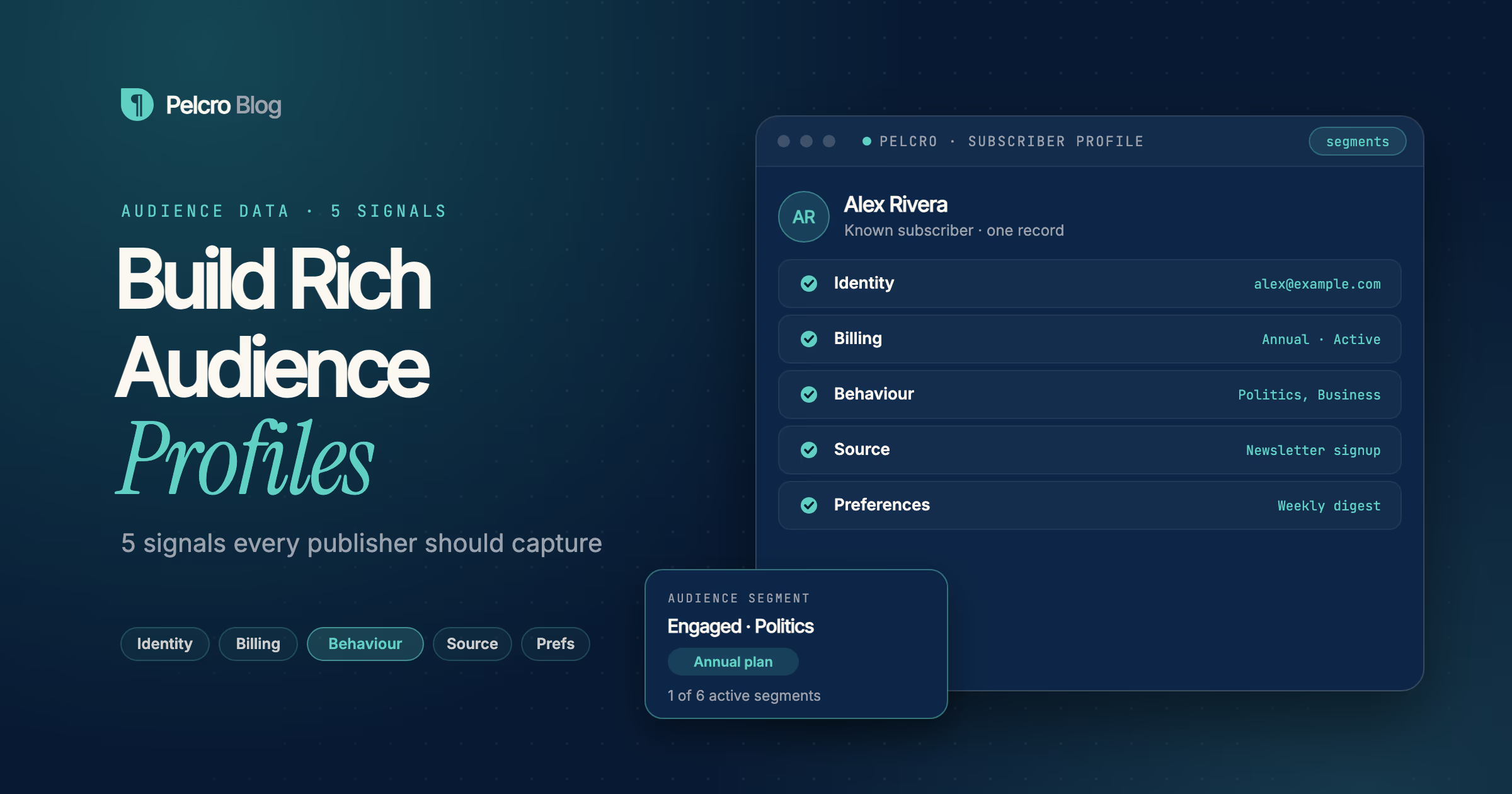
A customer profile is what you know about one subscriber, and audience profiling is grouping those profiles into segments you can act on. For publishers, five signals build useful profiles: identity, subscription and billing status, content behaviour, acquisition source, and stated preferences, because together they drive retention, personalization, and advertising value.
This guide is for publisher audience, data, and revenue teams turning raw sign-ups into profiles they can use. It covers the five signals that matter and how to profile an audience without stitching tools together.
What is a customer profile?
A customer profile is the single view of one subscriber: who they are, what they pay for, and how they behave. Audience profiling is the next step up, where you group profiles that share traits into segments, such as "annual subscribers who read politics" or "lapsed monthly readers from search."
For a publisher, profiles turn anonymous traffic into a known, addressable audience. A rich customer profile tells retention who is at risk, tells editorial what a reader wants more of, and tells advertising who is actually in the audience. Without it, every team guesses from partial data.
Many publishers keep these signals in separate tools: identity in the CMS, billing in a payment system, behaviour in analytics, and preferences in an email platform. Audience profiling only works when those live on one record, because a profile split across four systems is four half-pictures, not one subscriber.
5 signals for customer profiles and audience profiling
Capture these five and you can build almost any segment a publisher needs.
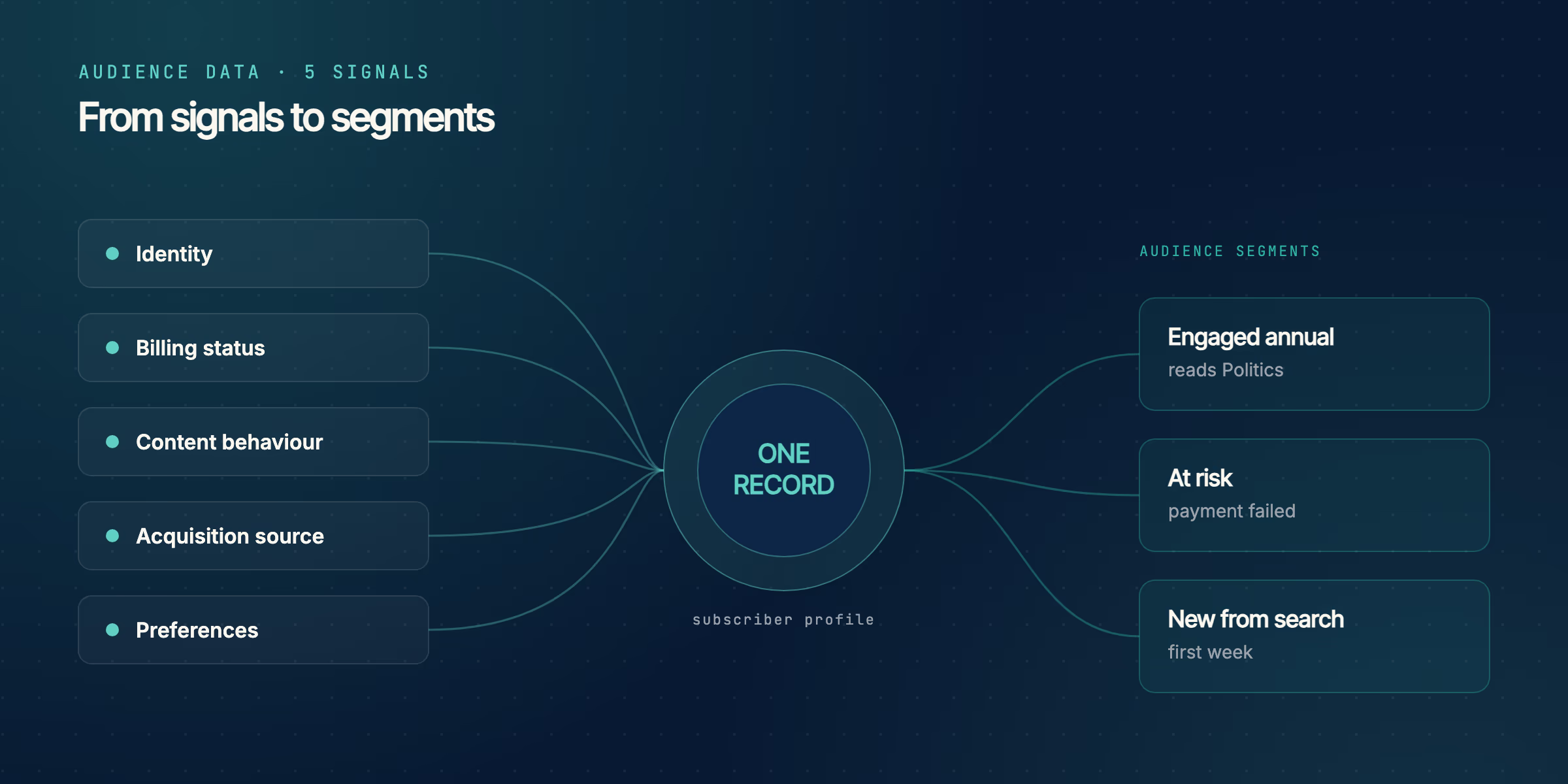
1. Identity and contact. The email and account that make a reader known rather than anonymous. This is the backbone of the profile, since everything else attaches to it.
2. Subscription and billing status. Plan, cycle, renewal date, and payment health. It separates a loyal annual subscriber from a lapsed trialist, which changes how you treat each one.
3. Content behaviour. What the reader reads, how often, and on what device. Behaviour is the strongest signal of interest and of churn risk, and it feeds straight into propensity modeling.
4. Acquisition source. How the reader arrived, such as search, a newsletter, or a campaign. Source predicts quality, because readers from different channels retain and convert at different rates.
5. Stated preferences. Topics, formats, and frequency the reader tells you directly. Collect these gradually with progressive profiling so you build preference data without a long form.
How Pelcro builds subscriber and audience profiles
Pelcro keeps these signals on one subscriber record, a customer data platform built for publishers, instead of four tools. Identity and access, subscription and billing status, and the events around them all attach to the same profile, so a reader is one person whether they are reading, paying, or lapsing.
Because billing and behaviour sit together, Pelcro can build segments from the combination, such as annual subscribers reading a given topic, or monthly readers whose last payment failed. Those segments drive retention campaigns, personalization, and reporting from the same place the data lives.
That single record is also what makes audience profiling act on real events rather than estimates that drift out of date. You can deepen your reader data using the methods in 4 ways to learn more about your audience.
Frequently Asked Questions
What is the difference between a customer profile and audience profiling?
A customer profile describes one subscriber, while audience profiling groups many profiles into segments. You build profiles first, then profile the audience by finding the traits those profiles share.
What data goes into a customer profile?
A useful profile combines identity, subscription and billing status, content behaviour, acquisition source, and stated preferences. The combination matters more than any single field, because segments come from how the signals overlap.
Why should customer profiles live in one system?
A profile split across a CMS, a billing tool, an analytics product, and an email platform is four partial views that rarely agree. Keeping identity, billing, and behaviour on one record is what lets audience profiling act on the full picture.
How does audience profiling help with retention?
Profiling surfaces the segments most at risk, such as monthly readers with a failed payment or declining visits. Knowing who is at risk lets retention act before the subscriber churns rather than after.