
Dow Jones, the News Corp segment that publishes The Wall Street Journal, grew segment EBITDA 20% to $181 million in the April to June 2026 quarter on 7% revenue growth. WSJ subscriptions averaged 4.83 million, up 6%, with nearly 4.5 million of them digital-only.
For publishers building a subscription business, the Wall Street Journal Q4 results close out a full fiscal year and show where a business publisher's growth is coming from. This review covers the quarter, the full fiscal year, and five takeaways you can apply.
Scope and Snapshot
The Wall Street Journal is reported inside Dow Jones, one of News Corp's segments. News Corp's fiscal year ends June 30, so fiscal Q4 2026 covers April to June 2026, the same months as calendar Q2.
All figures below come from News Corp's fiscal Q4 and full-year 2026 earnings release filed with the SEC on August 5, 2026. Comparisons are to the prior-year period, and subscription figures are averages for the quarter.
Fiscal Q4 2026 key results:
- Dow Jones revenue: $644M (+7% YoY)
- Dow Jones segment EBITDA: $181M (+20%)
- WSJ digital-only subscriptions: 4.47M (+8%)
- WSJ total subscriptions: 4.83M (+6%)
- Digital share of WSJ subscriptions: 93%
- Barron's Group digital-only subscriptions: 1.51M (+15%)
- Dow Jones news products digital-only subscriptions: 6.26M (+9%)
- Digital advertising revenue: +10%
- News Corp total revenue: $2.34B (+11%)
Fiscal year 2026 at Dow Jones:
- Revenue: $2.50B (+7%)
- Segment EBITDA: $663M (+13%)
- Risk & Compliance revenue: $392M (+16%)
- Dow Jones Energy revenue: $301M (+8%)
Keypoint 1: Profit Grows Almost Three Times Faster Than Revenue
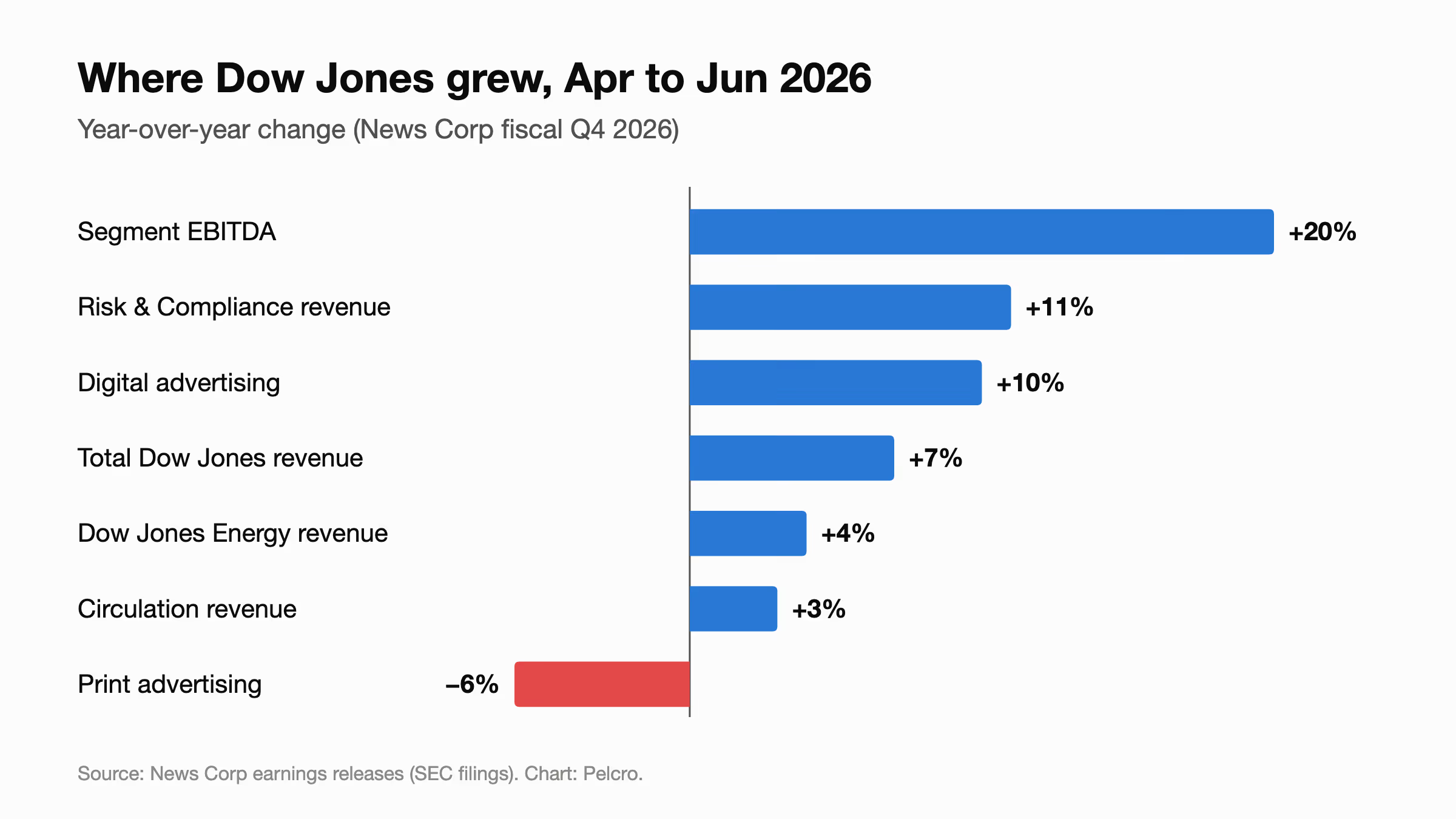
Dow Jones revenue grew 7% to $644 million in the quarter, while segment EBITDA grew 20% to $181 million. News Corp attributes the gain to higher revenue, partly offset by higher employee and technology costs. Digital revenue was 84% of Dow Jones revenue, up from 83%.
For the full fiscal year, Dow Jones revenue rose 7% to about $2.50 billion and segment EBITDA rose 13% to $663 million.
What to expect:
News Corp has set out a pathway to $1 billion in annual Dow Jones segment EBITDA within five years, so expect continued focus on high-margin digital revenue.
Why it matters:
When most revenue is digital and recurring, each additional dollar of revenue carries more profit. That operating leverage is the payoff of a digital subscription transition.
Keypoint 2: Enterprise Sales Keep WSJ Growing
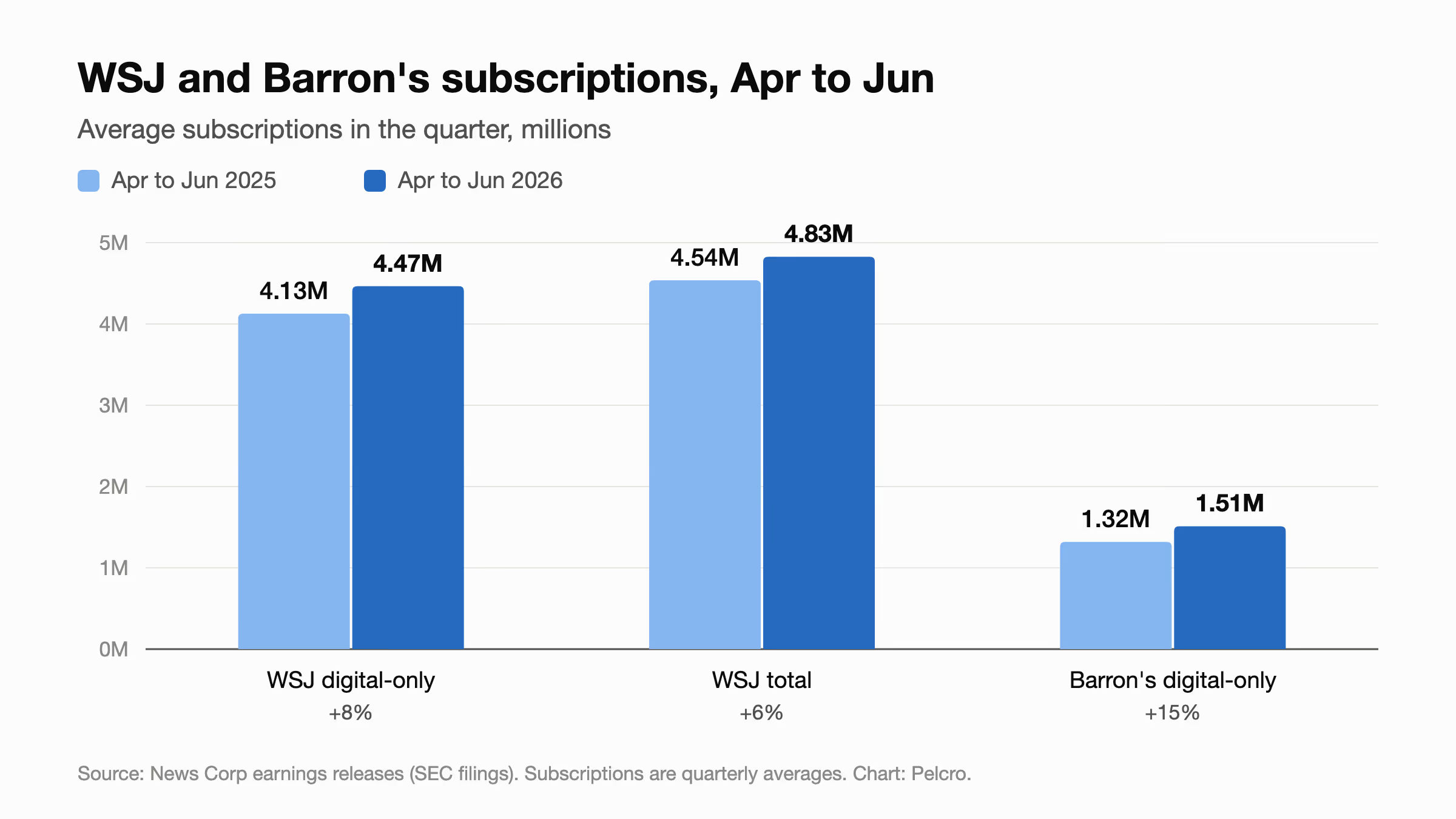
WSJ digital-only subscriptions grew 8% to an average of nearly 4.5 million, driven by growth in enterprise news subscriptions, and made up 93% of total WSJ subscriptions. Total WSJ subscriptions grew 6% to 4.83 million.
Barron's Group grew faster this quarter, with digital-only subscriptions up 15% to 1.51 million. Across all Dow Jones news products, total subscriptions passed 6.7 million.
Why it matters:
Enterprise subscriptions were named as the growth driver in both of News Corp's 2026 calendar quarters. Group sales to businesses and institutions are now a core channel for a major subscription publisher, not a side deal.
Keypoint 3: Introductory Offers Convert to Higher Prices
Circulation revenue rose 3%, driven by customers converting from introductory promotions to higher pricing and by continued digital-only growth, partly offset by lower print volume. For the full year, digital circulation revenue was 76% of circulation revenue, up from 74%.
Circulation and subscription revenue also benefited from higher content licensing revenue in the quarter.
Why it matters:
The Wall Street Journal and The New York Times both credit growth to subscribers moving off promotional pricing. The renewal at full price is where subscription revenue is earned, so it deserves as much attention as acquisition.
Keypoint 4: Professional Information Keeps Expanding
Dow Jones' professional information business grew 5% in the quarter. Risk & Compliance revenue grew 11% to $102 million, and Dow Jones Energy grew 4% to $76 million. Over the full year, Risk & Compliance grew 16% to $392 million and Energy grew 8% to $301 million.
Advertising revenue rose 5% in the quarter, with digital advertising up 10% and print down 6%. Digital made up 69% of Dow Jones advertising revenue, up from 65%.
Why it matters:
Specialist data products are a growing share of Dow Jones. Publishers that own unique data or expertise in a field can package it into higher-priced professional products alongside the consumer subscription.
Keypoint 5: A "Woo and Sue" Approach to AI
CEO Robert Thomson said News Corp has content relationships with OpenAI and Meta and is in advanced discussions with several other companies. He described a "woo and sue" approach: license content to partners and take legal action against those who take it without permission.
What to do:
Decide your own AI policy. Know which AI crawlers you allow, which you block, and what a fair license for your content would look like.
Why it matters:
Content licensing showed up as a driver of Dow Jones subscription revenue this quarter. AI companies need trusted content, and publishers that own it have something to sell.
How Pelcro Helps Publishers Build Recurring Revenue
Pelcro is a subscription and billing platform built for publishers. The Wall Street Journal Q4 results come down to recurring digital revenue, enterprise subscriptions, and converting introductory offers to full price, and Pelcro is built for each of those.
Group subscriptions let you sell seats to businesses and institutions under one account. Targeted promotions run introductory offers that step up to full price at renewal, and the client portal lets subscribers manage their plans without a support ticket.
For your AI policy, Pelcro's free AI agent blocking generator builds the rules to allow or block specific AI crawlers. To compare the same April to June period, read our New York Times Q2 2026 review, or browse all industry reports.
Frequently Asked Questions
How many subscribers does The Wall Street Journal have in 2026?
In the quarter ended June 30, 2026, The Wall Street Journal averaged 4.83 million total subscriptions, including about 4.47 million digital-only subscriptions. Digital accounted for 93% of the total.
What was Dow Jones revenue for fiscal 2026?
Dow Jones revenue for News Corp's fiscal 2026, which ended June 30, 2026, was about $2.50 billion, up 7%. Segment EBITDA was $663 million, up 13%.
Is The Wall Street Journal profitable?
News Corp does not report profit for The Wall Street Journal on its own. It reports Dow Jones as a segment, which includes the Journal, Barron's, and professional information businesses, and that segment earned $181 million in EBITDA in fiscal Q4 2026.
When will News Corp report its next results?
News Corp's next report covers fiscal Q1 2027, the July to September 2026 quarter. Last year it reported the same quarter in early November.